
Give Your Piano a New Voice with Fresh Hammers
A piano can stay in tune and still sound tired. Over years of playing, the tone often loses clarity and color. Notes that once sang out start to feel flat, harsh, or bland. Many players assume the whole instrument is simply getting old, but often the real issue is in one small area: the hammers.
The felt hammers are like the vocal cords of your piano. They are the first thing to touch the strings, and they shape how warm, bright, clear, or muddy the sound will be. When the hammers are worn, compacted, or damaged, the piano's voice changes, sometimes in ways that tunings alone cannot fix. With professional piano hammer replacement, an older or tired instrument can feel surprisingly fresh again, with new color and control under your fingers. At our shop in Yorktown Heights, we have seen how the right hammer work can wake up pianos of many ages and styles.
How Piano Hammers Shape Tone and Touch
Every time you press a key, a small system of parts moves inside the piano. The hammer is the piece of felt-topped wood that swings up and strikes the strings. Its job is to take the energy from your finger and turn it into string vibration, which becomes the sound you hear in the room.
The way a hammer is built has a big impact on your piano's voice. Things that affect tone include:
- Felt quality and density
- Hammer size and shape
- Exact point where the hammer meets the strings
- How evenly the hammers line up along the keyboard
A denser, harder hammer tends to sound brighter and more cutting. A slightly softer hammer can give you a rounder, more mellow tone. When hammers are in good condition and properly voiced, you get a wide range of color, from whisper-soft to powerful and clear.
Hammer condition also changes how the keys feel. Grooves in the felt, flat spots on the hammer crown, or hammers that have become very compacted from years of use can cause:
- Uneven tone between neighboring notes
- A sharp, "pingy" edge that never quite goes away
- Less control in soft playing
- A sense that the keyboard is either too stiff or oddly bouncy
So even if the tuning pins and strings are set just right, worn hammers can leave the piano sounding harsh, dull, or both at the same time.
Signs Your Piano May Need Piano Hammer Replacement
How do you know if your piano needs piano hammer replacement, light hammer work, or something else? There are a few clear signs many players notice.
First, listen for tonal warning signs:
- A harsh or metallic sound that remains after a careful tuning
- Notes that sound "glassy" or "pingy" compared to the rest
- Overall lack of warmth, even when you play gently
- A dull, lifeless quality, as if the piano is playing through a blanket
Next, take a look inside the piano. With the lid open and the action exposed, you may see:
- Deep grooves in the hammer felt where it hits the strings
- Flat, worn crowns instead of a smooth, rounded surface
- Uneven wear, where some hammers are more chewed up than others
Finally, notice how the piano feels under your hands. You might find:
- Soft dynamics are hard to control; the sound "jumps" out too quickly
- Some notes do not respond until you press harder than usual
- The piano seems to "fight back" when you try to play with nuance
When players share these kinds of concerns with us, we look closely at the hammers along with the rest of the action. Sometimes careful reshaping and voicing can bring the felt back to life. Other times, full piano hammer replacement is the better long-term choice. A professional evaluation helps decide which option makes the most sense for your piano and your goals.
What Happens During Professional Hammer Replacement
Piano hammer replacement is more than just swapping old parts for new ones. It is a detailed process that affects every note you play.
Here is a general outline of what happens:
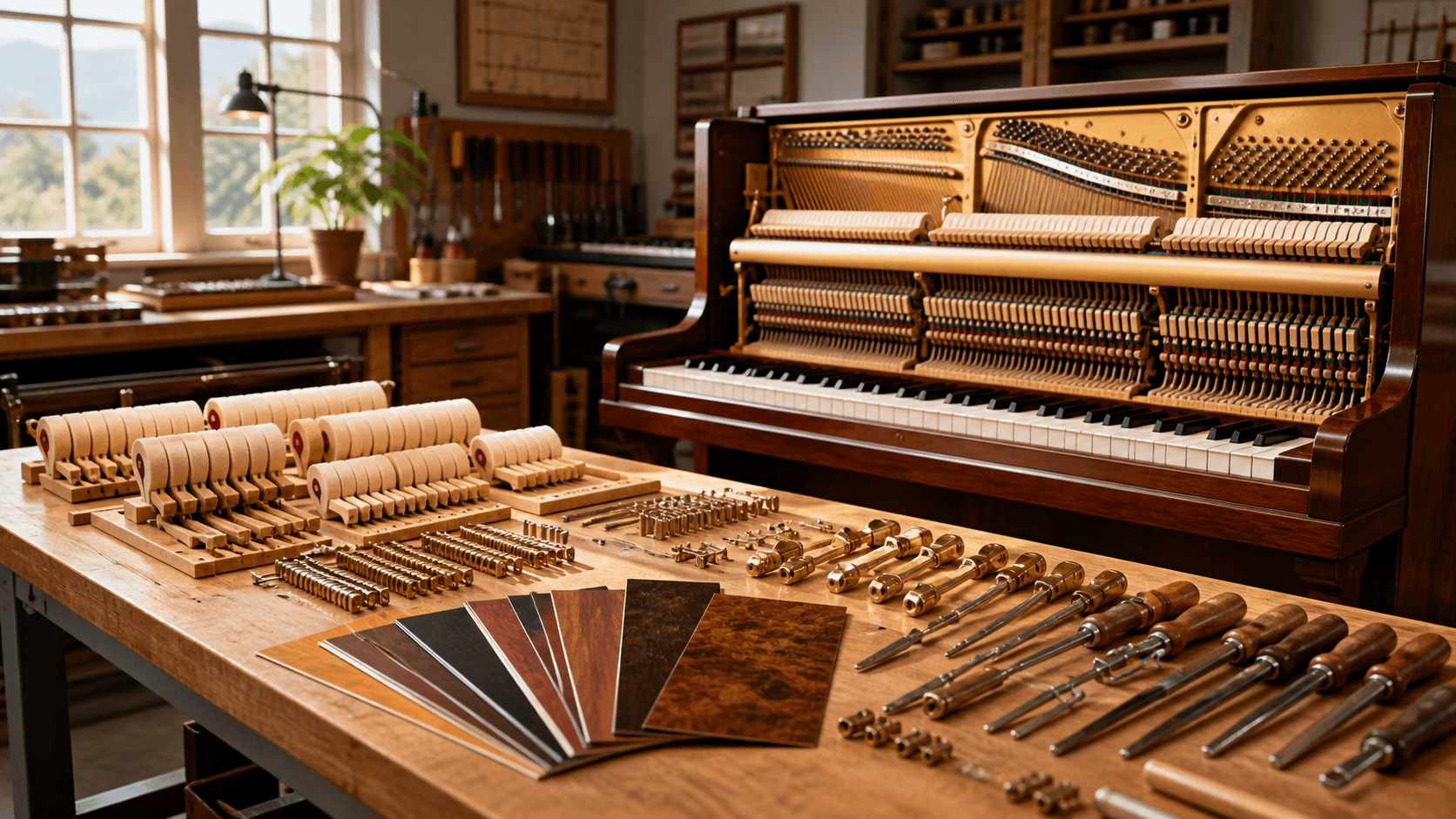
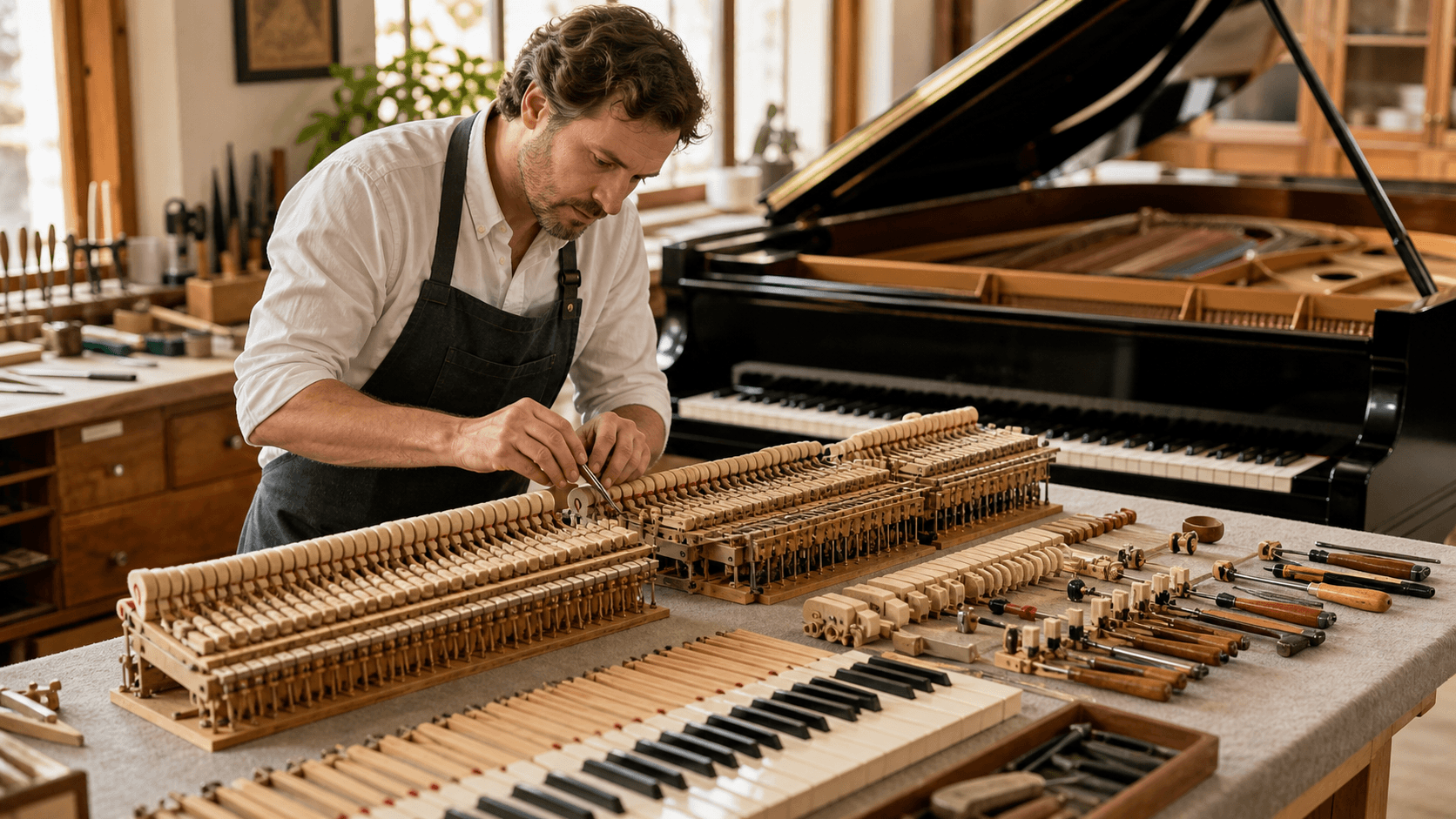
- The action (the full key and hammer mechanism) is carefully removed from the piano
- The technician studies the existing hammers, shanks, and related parts
- Quality replacement hammers are selected to match the piano's scale and musical style
- Old hammers are removed and new hammers are installed on the shanks
Installation is only the beginning. The new hammers must be:
- Aligned so each one hits its strings squarely and evenly
- Spaced so there are no side rubs or double strikes
- Fitted and weighted so the touch feels smooth from bass to treble
After that, the action goes through regulation. This means fine adjustments to how far the keys travel, when the hammers let off, how quickly they repeat, and how the dampers respond. Good regulation is what makes the keyboard feel consistent, so your hands do not have to "re-learn" each note.
Voicing is the final artistic step. By needling and shaping the felt, the technician can adjust:
- Brightness versus warmth
- How much attack you hear at the start of the note
- How the sound blends across different sections of the keyboard
At our shop, we connect this hammer work with the overall condition of the piano, including any rebuilding or refinishing that has been done or may be needed. The goal is for the new hammers to work in harmony with the rest of the action so the instrument responds as one balanced system.
Seasonal Timing and How Long Results Will Last
Timing your piano hammer replacement can make the process smoother. Early summer is often a relaxed period between school concerts, choir seasons, and lesson schedules. That break can be a good window to have more involved work done, then enjoy a refreshed instrument when fall activities start again.
Here in Westchester County and the greater New York region, we live with real swings in humidity and temperature. Felt, wood, and glue all react to those changes. Getting major action work done before the stickiest part of summer can help your new hammers settle in more smoothly, especially if the piano is in a space without tight climate control.
Hammer life expectancy depends on how and where the piano is used:
- A lightly used home piano may keep its hammers for many years
- Teaching studios and practice rooms can wear hammers more quickly
- Performance pianos with heavy daily use may need fresh hammers more often
To help your new hammers stay in good shape, we usually suggest:
- Regular tunings on a steady schedule
- Reasonable climate control, avoiding extreme dryness or heavy dampness
- Periodic voicing and action checks to address small issues before they grow
With that kind of basic care, most players enjoy a long, stable period where the piano sounds and feels consistently good.
Hear the Difference and Plan Your Evaluation
Hearing and feeling the effect of new hammers in person can be eye-opening. When you sit at a piano that has recently had careful hammer work, the response under your hands often feels more direct. Soft notes come out easily, loud notes ring without strain, and the overall sound is more even from the low bass to the top treble.
At Ford Piano in Yorktown Heights, we work on pianos in homes, schools, churches, and performance spaces across the region. Many of the instruments we care for have had piano hammer replacement or related action work, so players can experience what a refreshed hammer set can do for tone and touch. Hearing that difference side by side with a more worn instrument can make your decision much clearer.
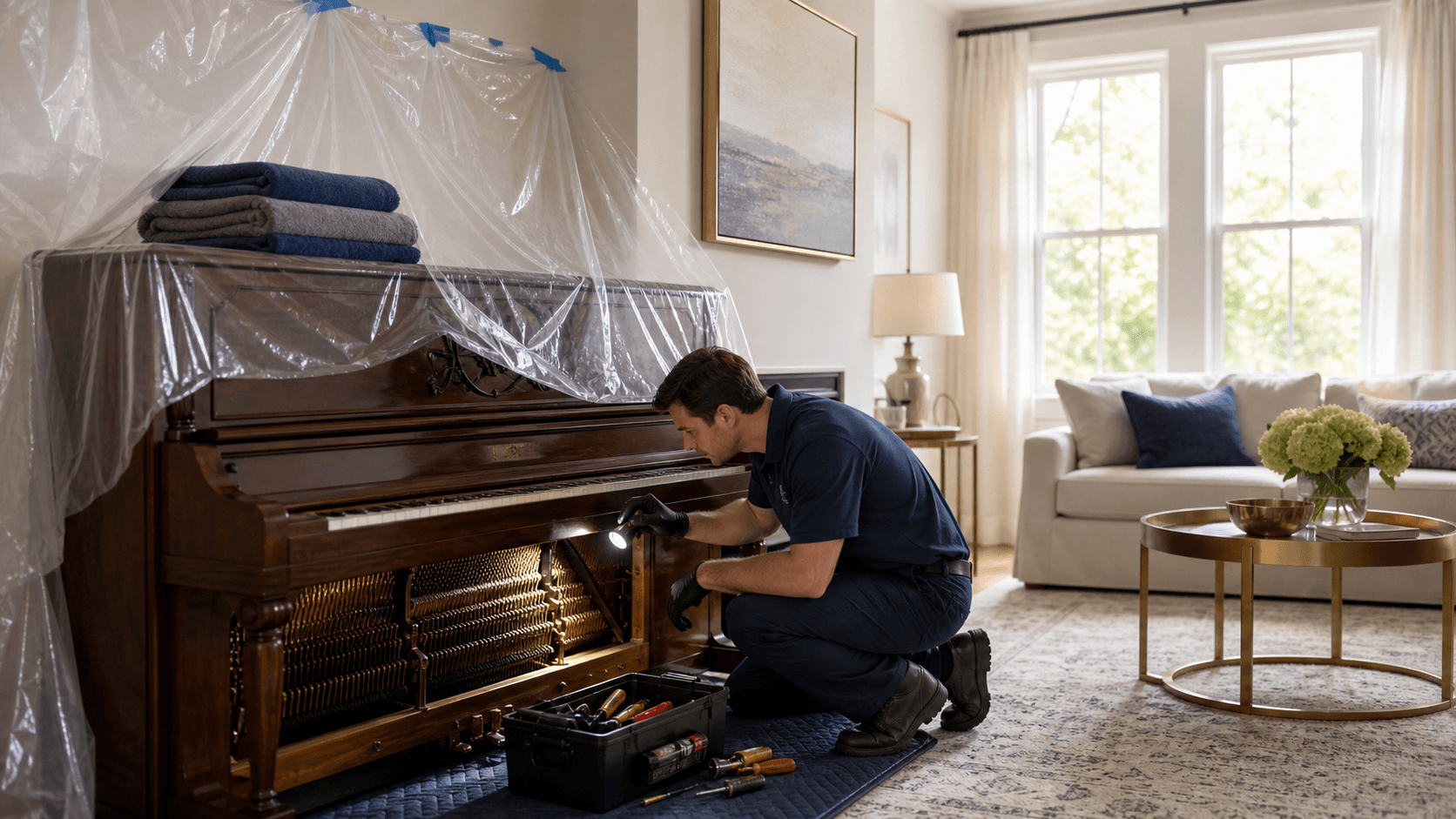
A professional in-home or on-site assessment helps decide whether your piano needs full replacement, voicing, regulation, or a mix of these services. When the right work is chosen and done with care, the payoff is long-lasting. The instrument becomes more rewarding to practice on, students can hear their progress more clearly, and the piano's overall value is better preserved for the future.
Restore Your Piano's True Tone With Expert Care
If your instrument no longer responds with the clarity and color it once had, we can help bring that sound back. Our technicians carefully evaluate your piano's needs and guide you through whether piano hammer replacement, voicing, or other fine adjustments are right for you. At Ford Piano, we tailor every service to the way you play so your piano feels and sounds inspiring again. To schedule an appointment or ask a question, please contact us today.