Stop Wasting Time on the Wrong Used Pianos
Buying a used piano should feel exciting, not stressful. Yet many New York buyers rush into a deal through an online marketplace, an estate sale, or a quick visit to a random showroom and end up with a piano that needs constant repair or hardly plays at all. What looked like a bargain quickly turns into a headache.
If you want to avoid that, the dealer you choose matters as much as the piano itself. A good used piano dealer in New York helps you protect your money, your time, and your love of music. In the warm summer months, when schedules are often a bit more open and families are home more, it can be a great time to slow down, visit showrooms, and choose carefully.
In this guide, we share how to pick the right dealer, what to look for in a showroom, how to compare value and warranties, and why having trusted local support for tuning, repair, and moving makes such a difference over the life of your piano.
Why Your Dealer Matters More Than the Piano Brand
Many buyers focus only on brand names. Brand is important, but with used pianos, the dealer behind the instrument often shapes your whole experience.
A reputable dealer will:
- Ask about your skill level, goals, and space
- Help you choose between upright and grand, and acoustic and digital
- Guide you toward the best piano in your budget, not just the highest-priced one
Pianos are complex, with thousands of parts working together. Two pianos with the same brand name can feel completely different, depending on how they have been cared for and prepared. That is where the hidden work comes in.
There is a big difference between a piano that was only dusted off and one that has been:
- Fully inspected inside and out
- Regulated so the keys respond evenly
- Voiced so the tone is smooth and pleasing
- Tuned by a trained piano technician
In New York, we also have to think about climate. Humid summers and dry winters can affect tuning stability, wood parts, and even how the action feels. A good used piano dealer in New York understands local conditions and prepares and places instruments with that in mind.
You are not just buying a piano for today. You are starting a relationship that can last for many years. When you work with a trusted local shop, you can count on:
- Regular tunings on a schedule that works for you
- Honest advice about small repairs before they become major ones
- Support if you want to trade up as a student grows or a player advances
- Knowledgeable help when it is time to move the piano to a new home or studio
At Ford Piano, we take that long-term view. As a family-owned shop in Yorktown Heights, we have built our work around sales, tuning, repair, restoration, refinishing, and moving, all under one roof. That is the kind of full support you want from any dealer you consider.
Must-Have Credentials for Any New York Used Piano Dealer
Before you fall in love with a single instrument, take a close look at the dealer's background. A strong history and local reputation matter.
Things to research include:
- How long they have served New York and Westchester County
- Whether they are family-owned and service-minded
- What local teachers, schools, and musicians say about them
Online reviews can be helpful, but do not stop there. Ask music teachers or friends who play to share where they bought their pianos and how the after-sale service has been.
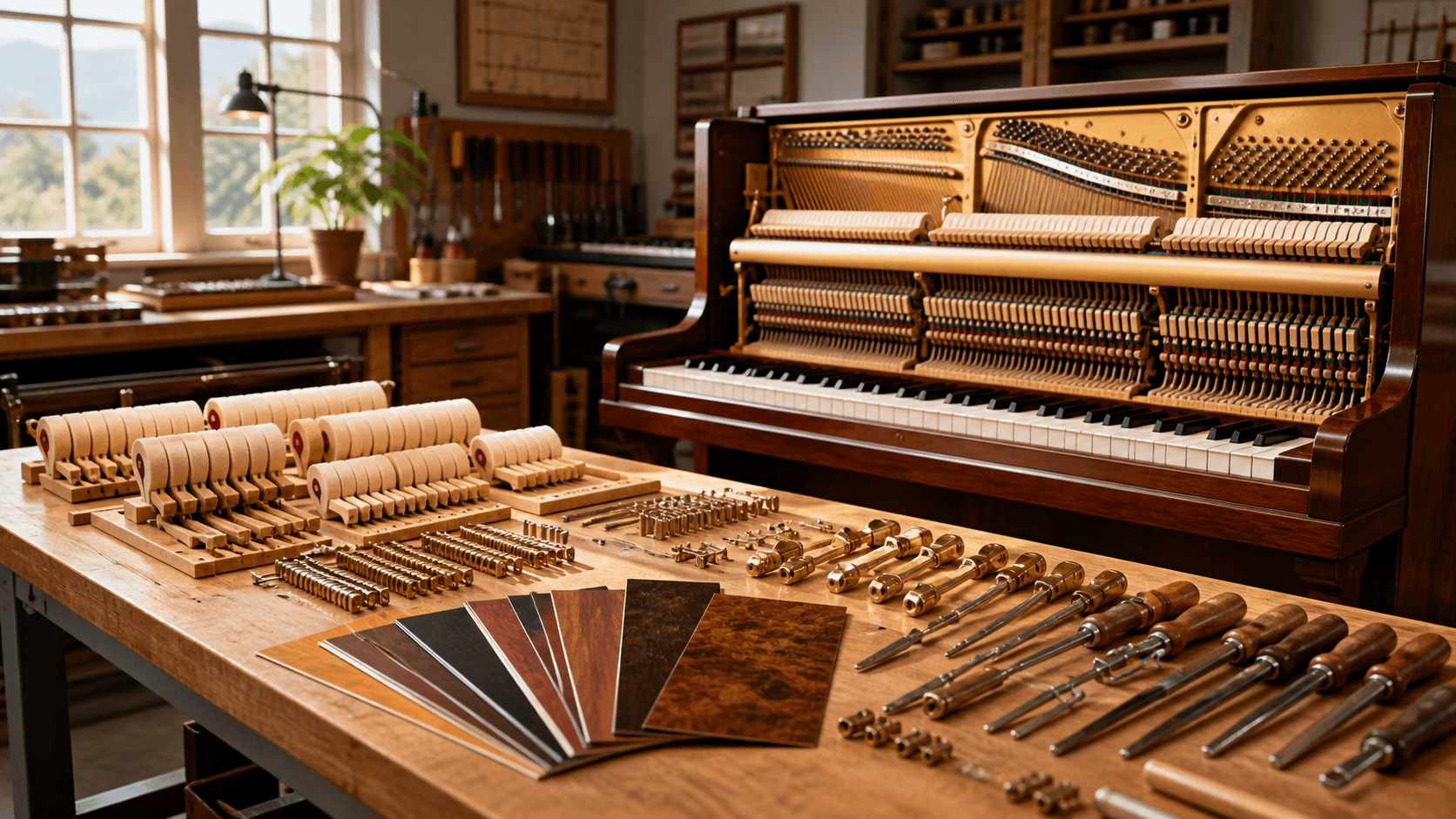
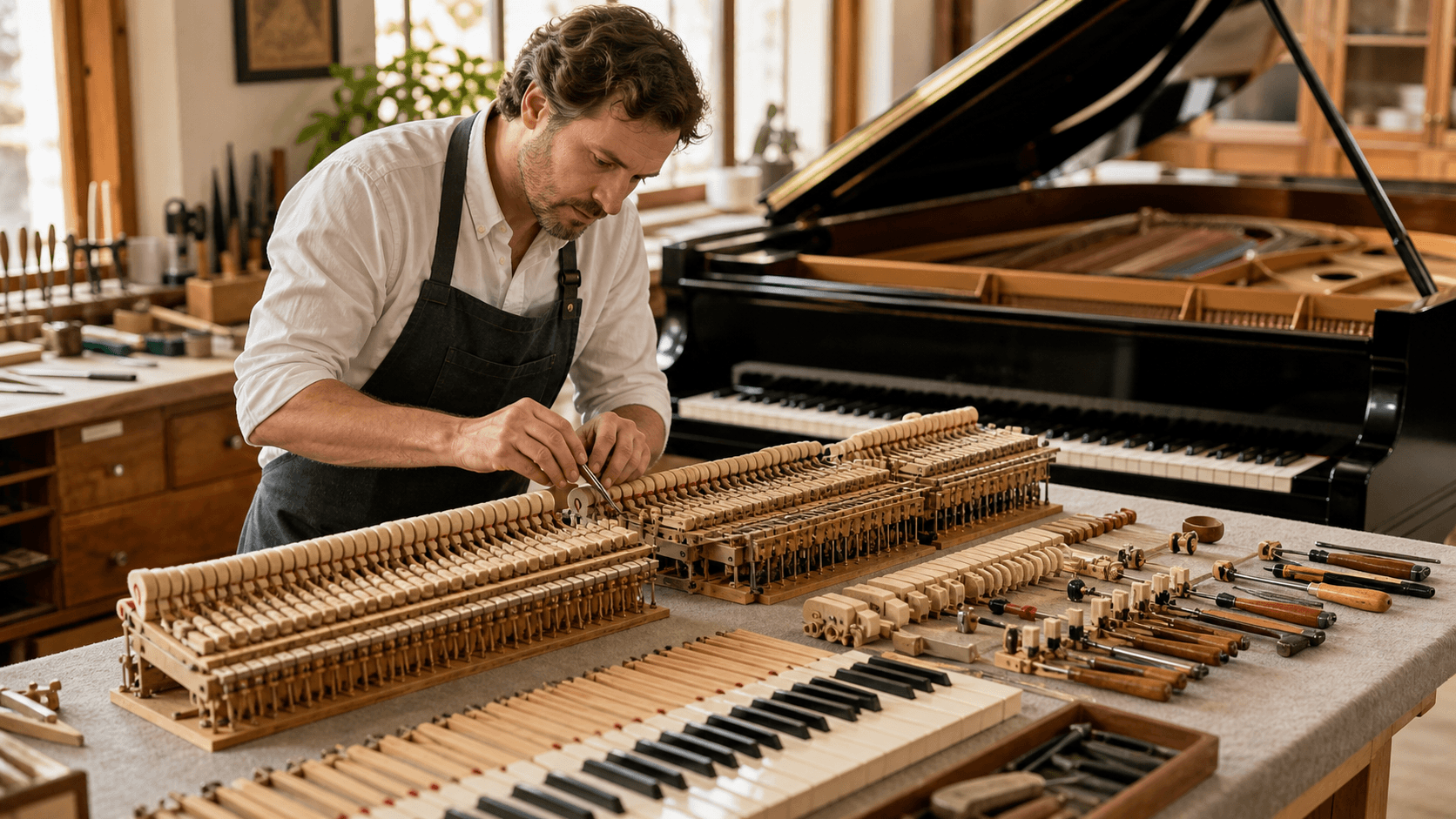
In-house technical skill is just as important. Used pianos need people who really understand how they work, not just someone who can polish the lid and set a price tag on it. Ask if the dealer has technicians who handle:
- Regular tuning and basic repair
- More complex work like action repair or key work
- Full restorations, including inside parts and refinishing
This tells you whether they can care for your piano over time, not just get it out the door.
Transparency is another key sign of a dealer you can trust. You should feel comfortable asking about:
- Serial number and age of the piano
- Brand background and where it likely spent its life
- Whether it came from a home, school, church, or another setting
- Any major repair, rebuilding, or refinishing already done
You also want clear, written information on what is included in the sale, such as:
- First tuning after delivery
- Matching bench
- Delivery details
- Warranty coverage
- Trade-in or upgrade policies
If the dealer is vague, changes the subject, or cannot give straight answers, that is a red flag.
How to Shop a Used Piano Showroom with Confidence
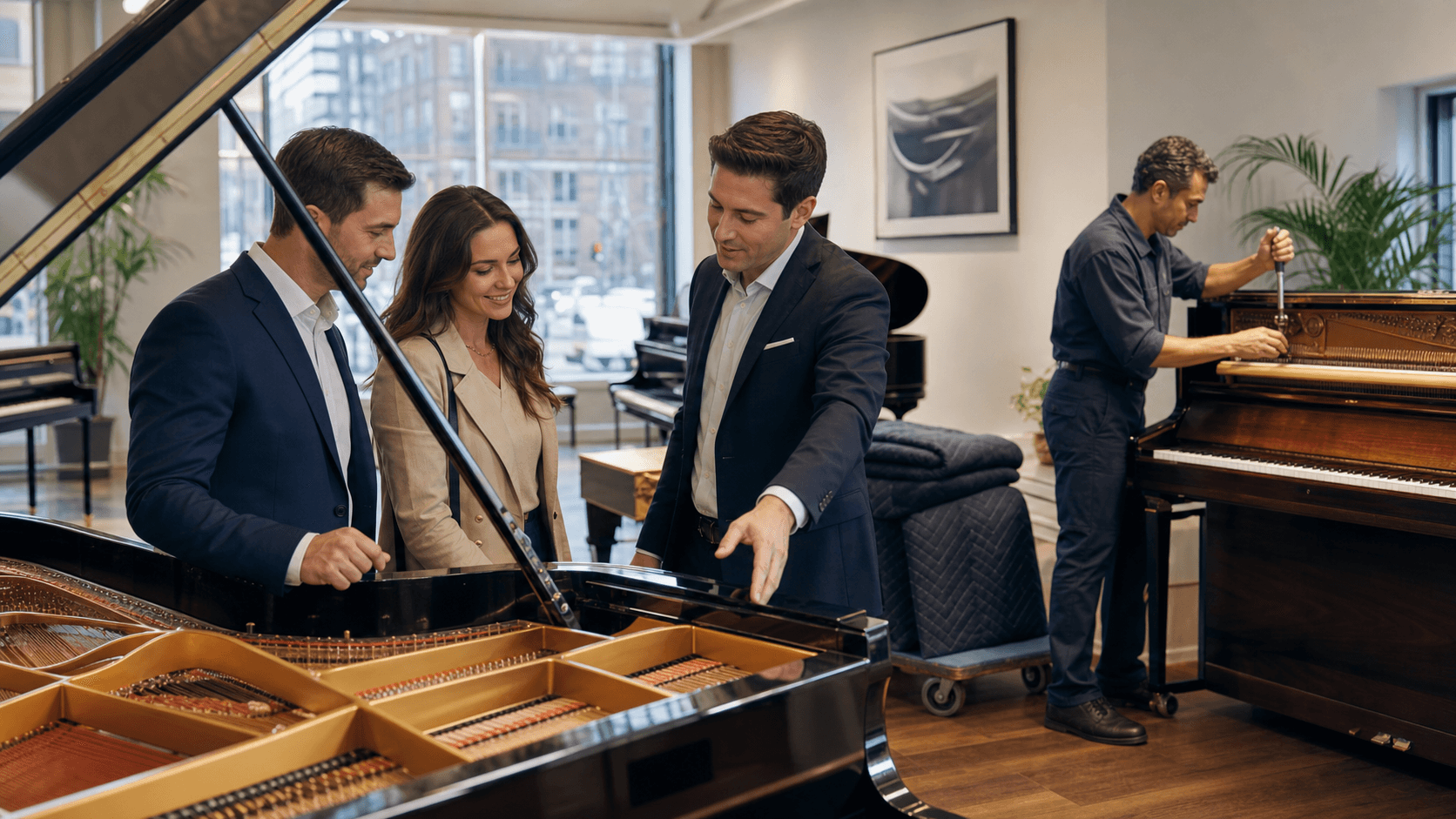
When you visit a showroom, give yourself time to look, listen, and ask. A good used piano dealer in New York will have a range of uprights and grands, from starter instruments to higher-level pianos.
As you walk through, pay attention to basic signs:
- Case condition: large cracks, missing veneer, or water marks
- Keys: ones that stick, wobble side to side, or sit unevenly
- Sound: notes that are much louder or softer than others
- Pedals: squeaks, rattles, or poor response
These clues do not replace a technician's eye, but they can help you spot pianos that may not have been prepared very well.
The questions you ask the dealer will tell you a lot. Helpful questions include:
- Who last serviced this piano?
- What work did you do before putting it on the showroom floor?
- How long has it been in your inventory?
- What kind of warranty do you offer on used pianos?
A dealer with integrity will welcome questions, let you take your time, and encourage you to play many instruments. You should never feel rushed or pushed into a quick decision.
If you are a beginner or buying for a child, bring a teacher, friend, or family member who plays. Or ask the staff to play for you so you can listen for:
- Tone: bright, mellow, or somewhere in between
- Clarity: how clean the notes sound when played softly and loudly
- Dynamic range: how the piano responds when playing quietly and then strongly
Try several pianos in the same price range and notice how each one feels under your hands and sounds in your ears. The 'right' piano is the one that fits you, not just the one with the biggest brand name.
Protecting Your Budget: Value, Delivery, and After-Sale Care
It is easy to be drawn to the lowest price, especially with private listings. But with pianos, the cheapest option often ends up costing the most once you add in surprise repair work and extra tunings.
Instead of focusing only on the sticker, look at total value:
- Was the piano inspected, regulated, voiced, and tuned?
- Is a first in-home tuning included after delivery?
- Is there a warranty on parts and labor?
- Is a bench included and matched to the piano?
- Will the same shop support you in the future?
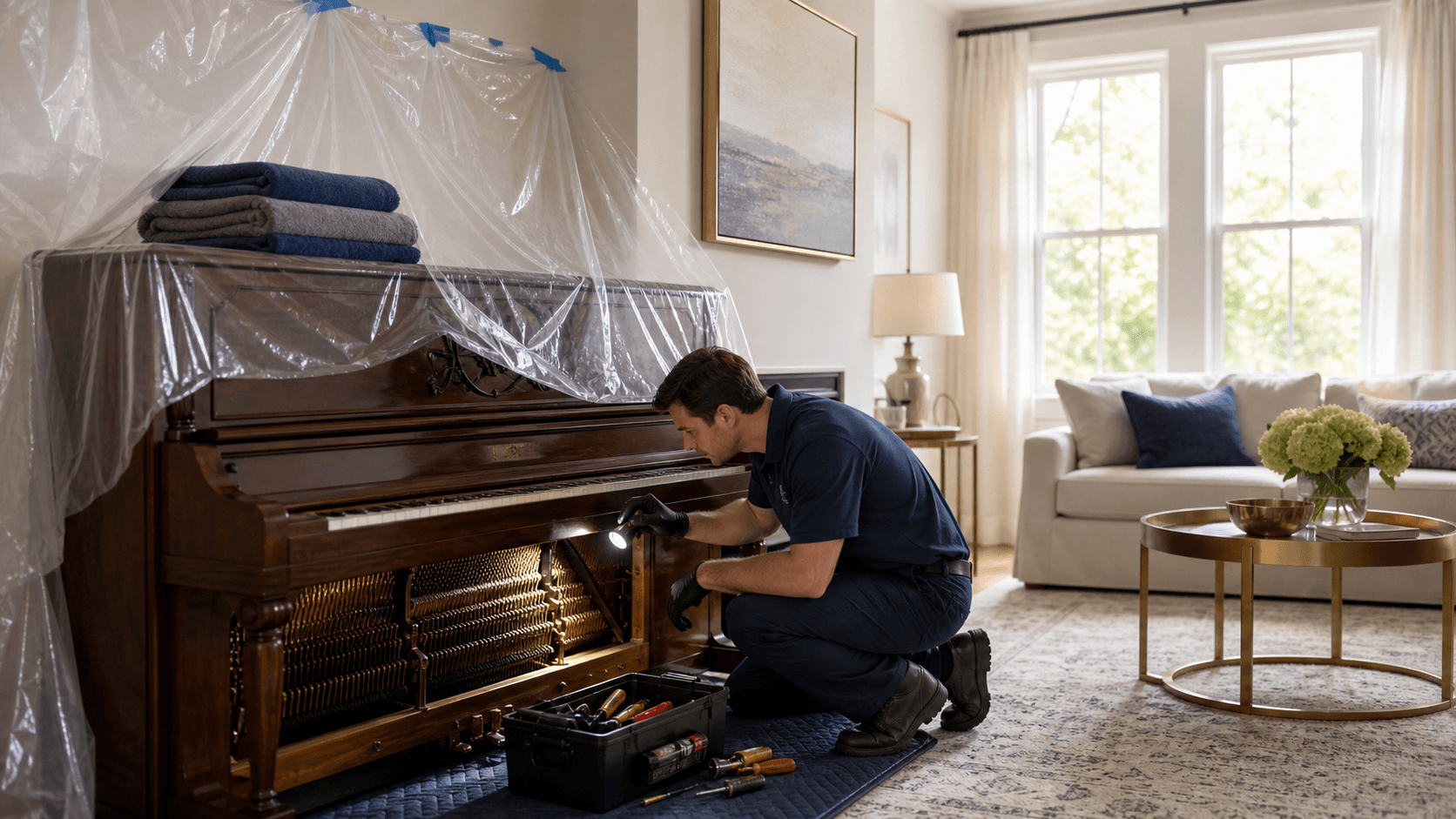
Delivery is another big piece. Moving a piano is not like moving a couch. A reliable used piano dealer in New York works with experienced, insured movers who know how to handle:
- Tight staircases and small elevators
- Brownstones, older homes, and uneven floors
- Room placement that avoids heat sources and direct sun
Once the piano is in place and has time to settle, it will need a tuning again to adjust to its new environment. A full-service shop like Ford Piano can help with delivery, placement advice, and follow-up care.
Think long-term too. A dealer who offers regular tuning, repair, and even full restoration gives you options as your needs change. Many families and students start with a modest upright, then later want to upgrade to a grand or higher-level instrument. Trade-up or consignment options through the same dealer can make that step much simpler.
Make Your First Visit Count at Ford Piano
Summer can be a relaxed time to explore pianos. School is out, schedules can be a bit more flexible, and many families are spending more time at home. That makes it easier to visit a showroom, listen closely, and talk through questions without rushing.
Before you walk through the door, it helps to make a short list:
- Who will play the piano and how often
- Whether you prefer upright or grand
- Your general budget range
- Whether you are open to both acoustic and digital options
You can also learn a lot by reading about services like tuning, repair, restoration, refinishing, and moving, so you know what support you can count on after you buy.
At Ford Piano in Yorktown Heights, we welcome families, teachers, students, and working musicians who want a used piano dealer in New York they can trust. When you visit our shop, we take time to listen, guide you through different instruments, answer every question, and help you find a piano that fits your home, your music, and your budget so you can enjoy playing for years to come.
Find Your Ideal Pre-Owned Piano With Expert Guidance
Choosing the right instrument is easier when you have a trusted partner, and at Ford Piano we're ready to help you every step of the way. Explore our curated selection through our used piano dealer in New York and discover options that fit your space, playing level, and budget. If you would like personalized recommendations or have questions about specific models, simply contact us and we will guide you to a piano you will enjoy for years.