Questioning a Free Piano? When Professional Piano Repair Makes Sense
A "free" piano offer sounds hard to pass up. Maybe a friend is giving one away, or you see a listing that looks perfect for lessons at home. Before you say yes, it helps to understand what you might be bringing through your front door. A piano is a complex instrument, and problems often hide under the lid.
In this guide, we will walk through how to look at a free piano, what warning signs to watch for, and when professional piano repair is worth the investment. We will also talk about situations where you are better off choosing another option so you end up with an instrument that supports real music-making, not frustration.
Before You Say Yes to a "Free" Piano
A free piano often comes up right when you need it. Maybe a child is starting lessons or getting ready for school band sign-ups. A free option seems like a smart shortcut. The catch is that pianos are large, heavy, and sensitive to changes in temperature and humidity.
Hidden costs can show up fast, including:
- Moving the piano from the current location into your home
- Short-term storage if the timing does not line up
- The first tuning after the move
- Piano repair for issues that were not obvious at first
So the real question is not "Is it free?" but "Is this piano worth caring for?" Knowing when to call in a professional, and when to walk away, can save you time, money, and stress.
Spotting Red Flags in a Free Piano Offer
You can often spot trouble with a simple, slow look around the piano. Start with what you can see.
Pay attention to:
- Cabinet damage, loose pieces or deep gouges
- Missing keytops or keys that are badly chipped or uneven
- Rusty hardware, flaking metal parts, or visible mold inside
- Signs of water damage, like swollen wood, stains, or a musty smell
Then sit at the piano and try a few notes in different areas. Listen and feel.
Watch for:
- Keys that stick, do not return, or do not play at all
- Notes that are much louder or softer than others
- Tones that die out right away instead of ringing
- Buzzing, rattling, or harsh metallic sounds
- A piano that is wildly out of tune across the whole keyboard
Location is a big clue too. In our part of New York, pianos that have lived in unheated garages, damp basements, or rooms that bake in direct sun usually have deeper issues. Years of humidity swings can cause damage that looks small but affects the whole instrument.
When Piano Repair Is a Smart Investment
Sometimes a free piano is actually a good find. The first thing we look at is the structure. If the basic "bones" of the instrument are solid, repair or rebuilding can make sense.
Good signs include:
- A sturdy frame with no obvious breaks or warping
- A soundboard with only minor, tight cracks and no strong buzzing
- Tuning pins that feel firm, not loose, when tested by a technician
There is also the personal side. We see many pianos that matter to a family. Maybe it is a piano that has been passed down, or it is from a known quality brand. If a student is serious about lessons and school music programs, a slightly older but solid instrument can still offer great musical value.
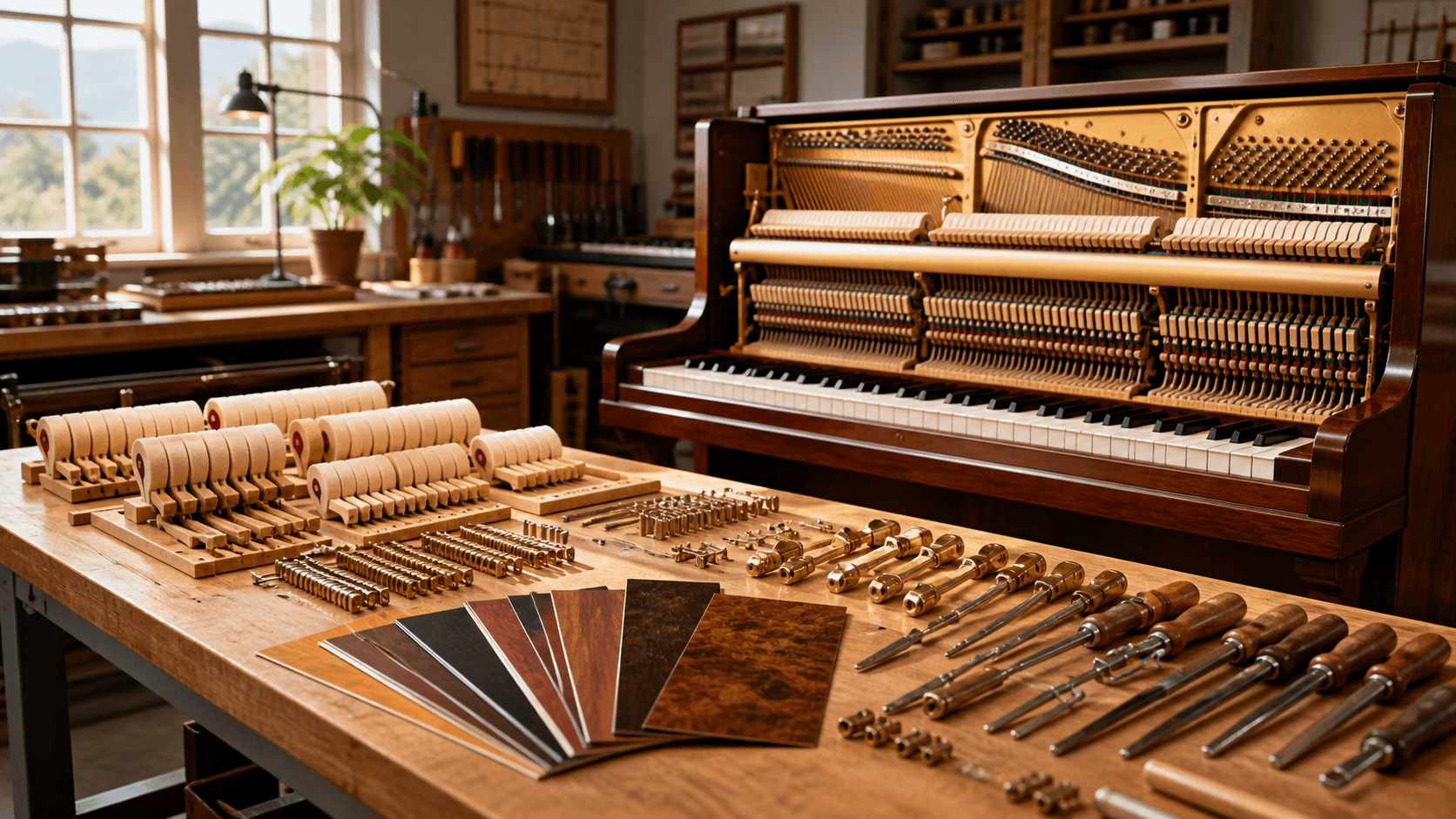
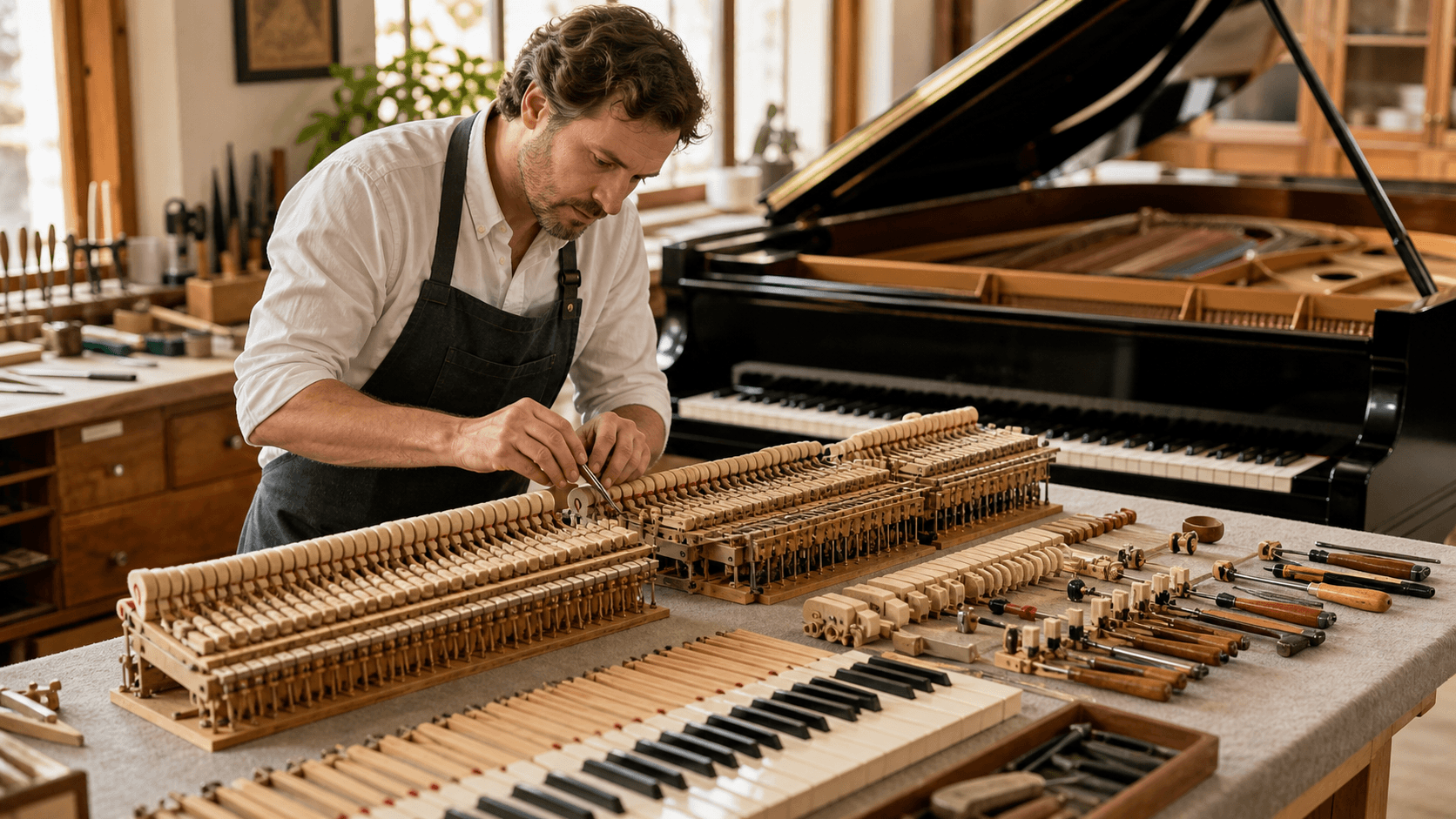
When a piano has good structure and decent basic quality, professional piano repair can extend its life for many years. Care like action work, regulation, and careful tuning can turn a "so-so" free piano into a dependable partner for practice and performance.
When to Walk Away and Choose Another Option
Some pianos are simply not worth the trouble, even if they cost nothing upfront. A few conditions almost always point to a bad investment.
These include:
- Major soundboard cracks that create buzzing or rattling
- A pinblock that will not hold a tuning for long
- Heavy rust on strings and metal parts
- Pest damage, strong mold smells, or soft, crumbling wood
- Missing or broken internal parts that affect large sections of keys
Age and original quality matter too. Many small spinet pianos, or very old, low-quality uprights, are hard to bring back to a level that feels and sounds good. For families starting lessons, putting time and money into a weak instrument can lead to discouragement.
Smarter choices often include:
- A well-maintained pre-owned upright from a trusted shop
- A short-term rental while you see how lessons go
- A studio upright that is already tuned, regulated, and ready for regular practice
What Professional Movers and Technicians Reveal
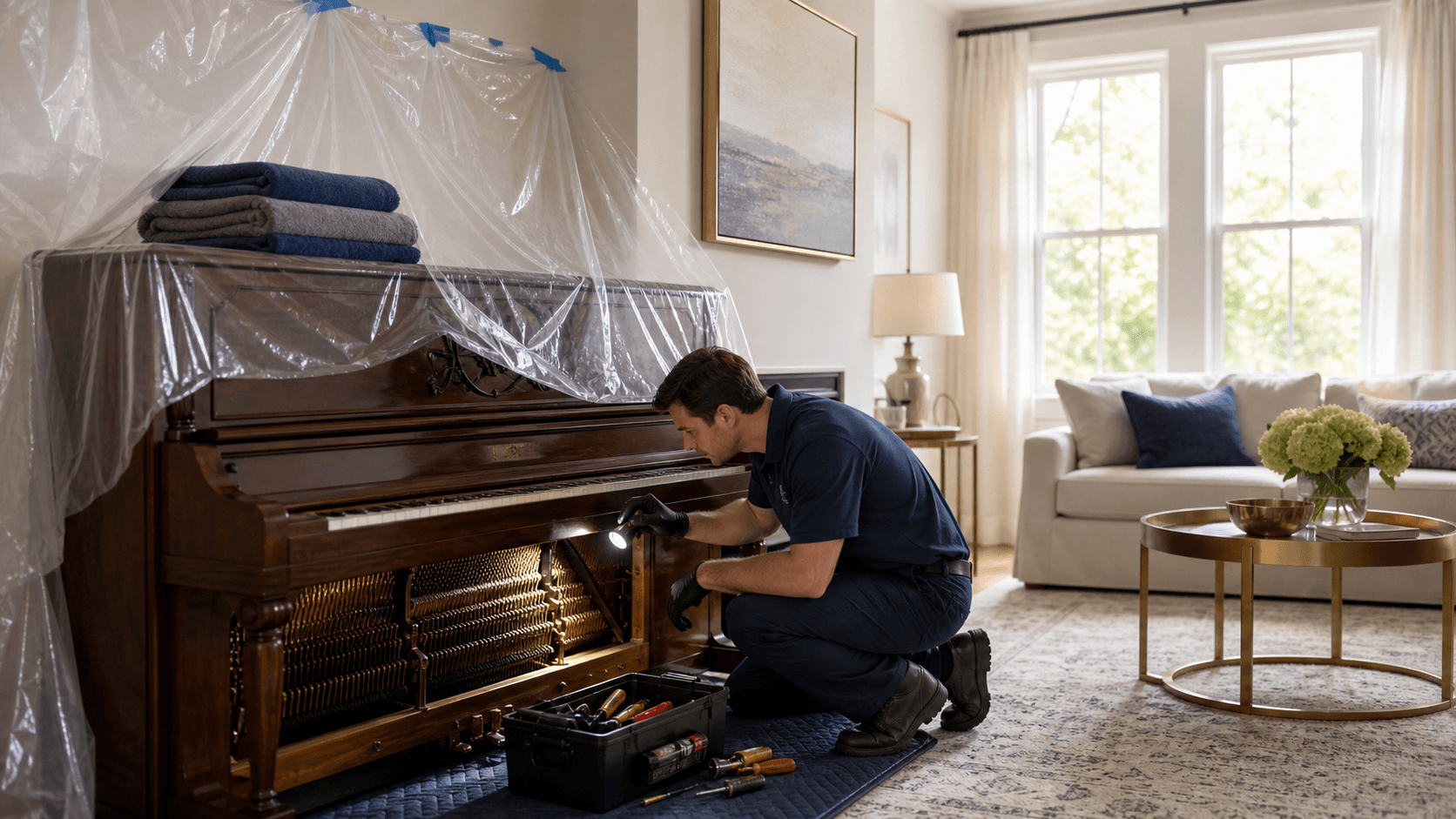
Moving is part of the decision. Pianos are heavy and delicate, and a rough move can cause new problems or make old ones worse. Professional piano movers use proper tools, padding, and techniques to protect the instrument, your floors, walls, and stairs.
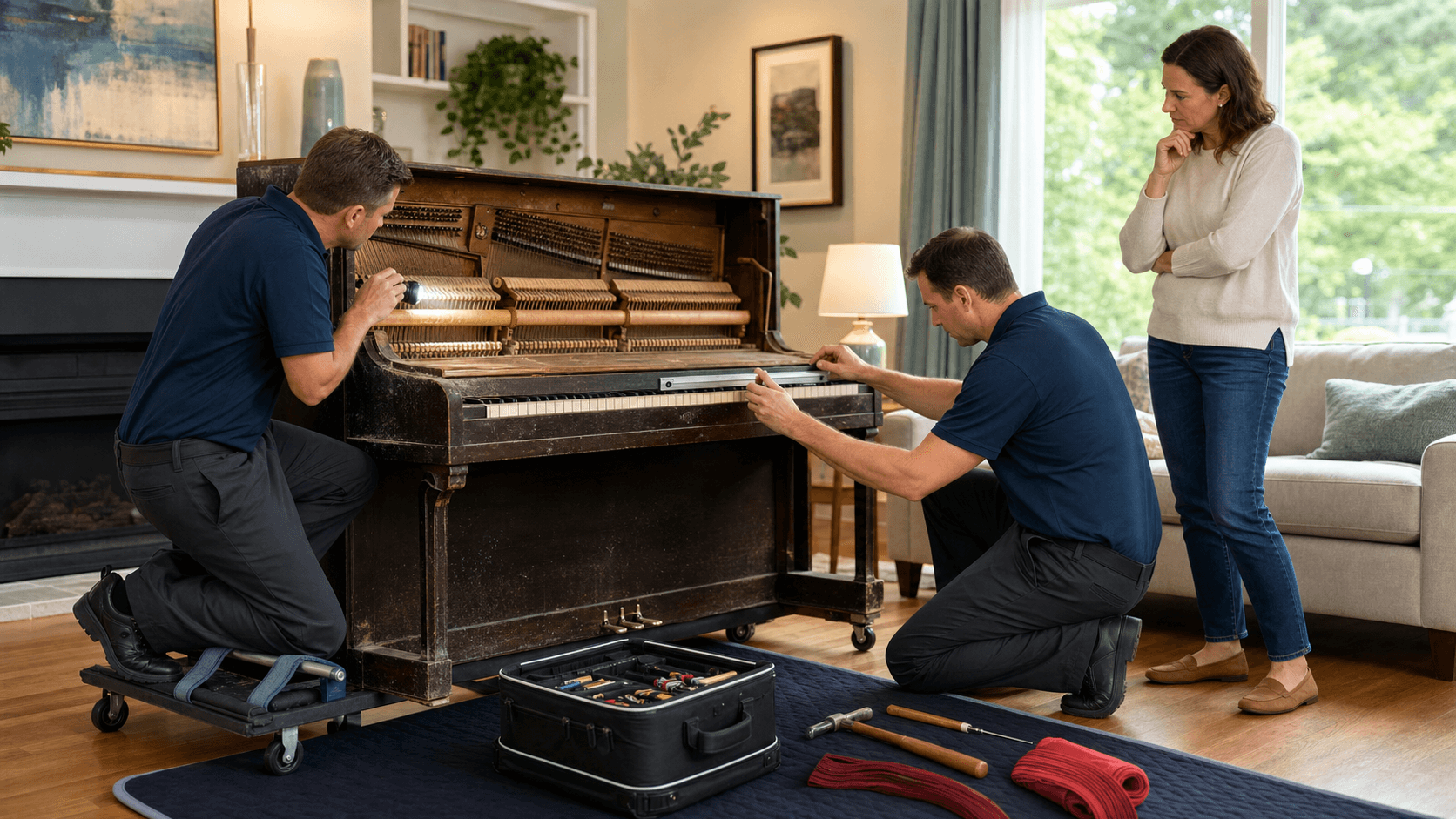
A qualified piano technician can offer a clear view of what you really have. An evaluation before or right after a move can reveal:
- Whether the piano can hold a stable tuning
- The condition of the action, keys, and pedals
- Repair needs in the short term and long term
- Whether the instrument is a good match for your goals
In the Hudson Valley area, we see how summer humidity and winter dryness affect pianos all the time. A technician can suggest repair and maintenance plans that fit our local climate so your instrument holds up through the seasons.
Getting the Most From a "New to You" Piano
If you decide to keep a free piano, the first weeks matter. Once the piano is in place and has adjusted to your home for a short time, plan for an initial tuning and basic repair. Dealing with sticky keys, noisy pedals, or uneven response early on makes the instrument more rewarding to play.
It also helps to set a simple care plan:
- Regular tunings, at least once or twice a year depending on use
- Occasional action work to keep the touch even
- Optional voicing or refinishing if you want to refine tone or appearance
Location inside your home is another key choice. Place the piano:
- Away from heating and AC vents
- Off exterior walls if possible
- Out of direct sunlight from windows or glass doors
- In a spot with fairly steady temperature and humidity
These small steps go a long way toward keeping your "new to you" piano stable, so repairs last longer and the instrument stays enjoyable to use.
How Ford Piano Can Help You Move Forward
At Ford Piano in Yorktown Heights, we work with free pianos and pre-owned instruments every day. We understand how tempting a no-cost offer can be, and we also know the problems that can ride along with it. Our technicians can evaluate an instrument, explain its condition in clear terms, and help you weigh the choice between repair, rebuilding, or looking at other options.
We offer tuning, repair, rebuilding, refinishing, moving, rentals, and sales for families and musicians across Westchester County and the surrounding region. Whether you decide to invest in a free piano or choose a different instrument altogether, you deserve clear guidance and a piano that supports real music in your home.
Restore Your Piano's Best Sound With Expert Care
If your instrument is sticking, out of tune, or just not sounding like it used to, we are ready to help bring it back to life. At Ford Piano, our experienced technicians provide detailed piano repair tailored to what your piano really needs. We take the time to evaluate your instrument, explain your options, and schedule service at a time that works for you. Have questions or ready to schedule an appointment? Simply contact us and we will follow up promptly.