
Hear the Difference: Why Piano Voicing Matters
Piano voicing is all about how your instrument sounds, not whether it is in tune. Tuning makes sure each note is at the right pitch. Voicing shapes the character of those notes so they are warmer, brighter, softer, or more powerful, depending on what you want to hear. Regulation focuses on how the keys feel under your fingers. Voicing is the step that makes the tone match your ear.
When voicing is right, your piano sounds like you expect when you sit down to play. Chords feel rich, melodies sing, and you can play softly without losing color. Many players around New York and Westchester live with harsh, dull, or uneven tone for years. They keep tuning the piano and think that is the best it can do. Often, what they truly need is careful professional voicing, especially as humidity shifts from late spring into summer and small tonal issues start to stand out more clearly.
What Piano Voicing Actually Changes in Your Sound
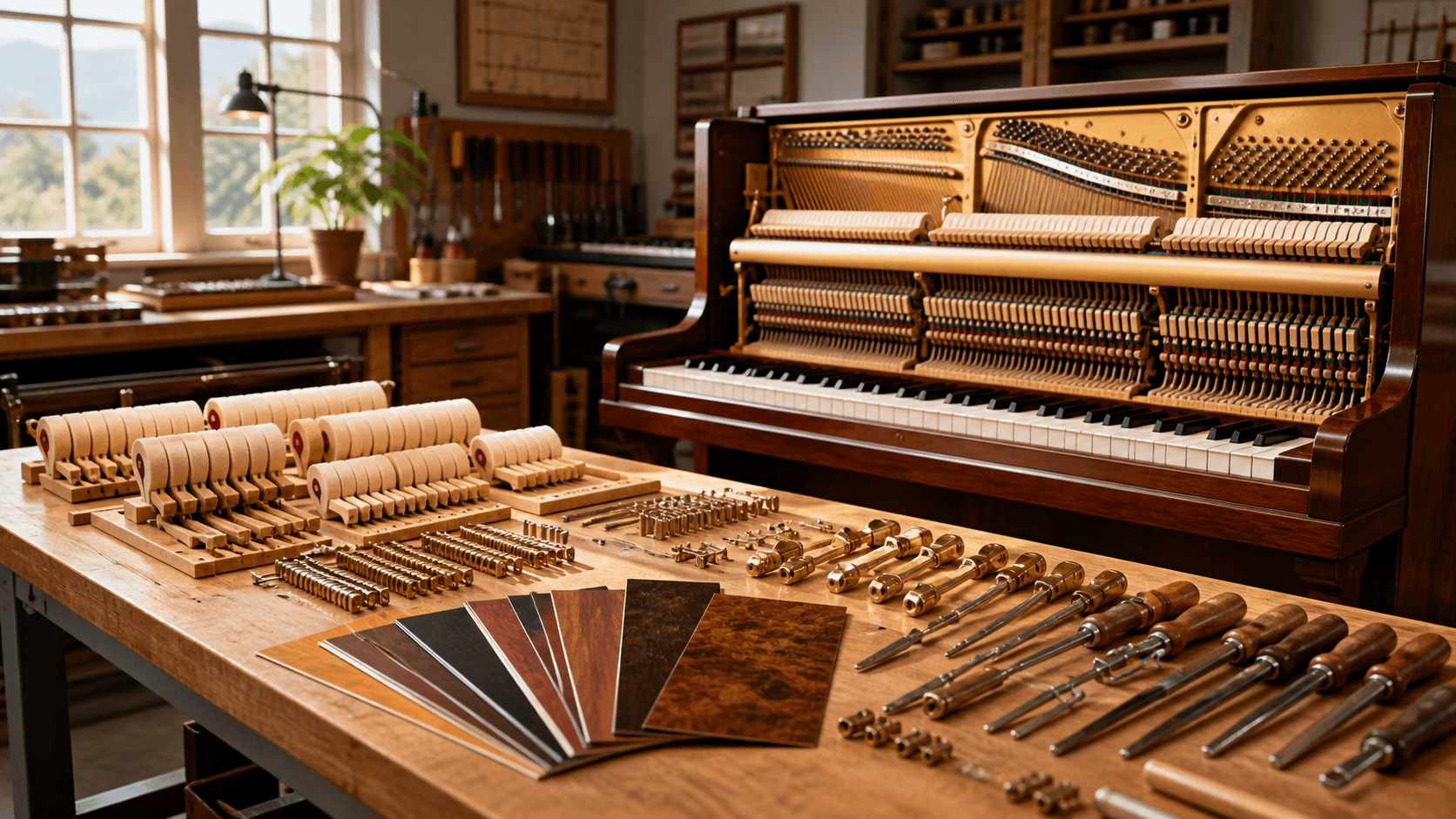
Inside your piano, felt hammers strike the strings. Over time, those hammers become worn, grooved, and packed down. A technician changes your sound mainly by changing the condition of those hammers. By adjusting the hardness, resilience, and shape of the hammer felt, we can shift the piano toward brighter, warmer, clearer, or more blended tone.
Here are three common tonal "personalities" we hear:
- Too bright and metallic: sharp, edgy high notes that feel almost painful
- Too mellow and muffled: soft but lifeless sound, no sparkle on top
- Uneven across the keyboard: some notes shout while neighbors whisper
Voicing works within your piano's natural character. Each brand and model has its own basic voice. A lively Yamaha will not suddenly sound like a dark, old Steinway, and the other way around. But within that natural voice, there is a wide range of color. Good voicing can:
- Smooth out harsh or glassy notes
- Bring life back to a tired, dull sound
- Make the bass clearer instead of muddy
- Even out the volume from note to note
You still keep the personality of your piano, just in a more refined, balanced way.
Clear Signs Your Piano Needs Professional Voicing
You do not need special training to notice when something feels off. Your ears and your hands will tell you. Watch and listen for signs like these:
- Piercing, glassy high notes that you try to avoid
- Bass notes that sound boomy or muddy instead of deep and clear
- Single notes that jump out louder or softer than neighbors in a scale or chord
- Tone that feels "tired" or flat, even right after a fresh tuning
Changes in your home can bring these problems into focus. Air conditioning in summer, windows open to humid air, or strong swings between dry and damp weeks can all affect how the hammers and strings respond. Around Yorktown Heights and the Hudson Valley, those seasonal shifts are common. You might notice your piano suddenly feels sharper or more uneven in tone as the weather changes.
Pay attention to your own playing habits too. Your piano may need voicing if:
- You skip certain keys or octaves because you dislike how they sound
- You feel you have to fight the piano to play gently or with control
- Soft passages feel thin, and loud ones feel rough instead of full
- Other pianos feel more expressive than yours, even though yours is tuned
If any of this sounds familiar, tuning alone is not likely to solve the problem.
Is it Tuning, Repair, or Piano Voicing You Really Need?
It helps to know which kind of service fits which problem. These four terms often get mixed together:
- Tuning: adjusts the pitch of the strings so notes are in tune with each other
- Repair: fixes broken, loose, or worn parts
- Regulation: adjusts how the keys and action feel and respond
- Voicing: shapes the tone, color, and volume balance
Here are a few simple self-checks:
- If chords sound sour or out of tune, but the basic tone is fine, you probably need tuning.
- If keys stick, double-strike, or feel uneven in depth or weight, you may need regulation or repair.
- If the pitch seems fine but your piano sounds harsh, dull, or inconsistent, you likely need voicing.
Many times, more than one area needs attention. At Ford Piano, our technicians often inspect the piano, tune it, take care of small repairs, and then voice it, all in a single visit. That way the pitch, touch, and tone all support each other for a better playing experience.
How Often to Voice Your Piano for Consistent Tone
How often you need voicing depends on how and where the piano is used. In a quiet living room with light use, the hammers wear slowly. In a busy home, teaching studio, church, or performance space, the hammers get a real workout.
As a general guide:
- Light home use: voicing every 2 to 3 years is often enough
- Frequently played family or teaching pianos: yearly voicing or touch-ups can help
- Church and studio instruments: regular checkups to keep up with heavy use
Things that speed up hammer wear and tonal change include:
- Long daily practice sessions
- Young or beginner players who naturally play with a heavier touch
- Strong seasonal humidity swings common in Westchester and nearby areas
- Skipping regulation and letting the action work harder than it should
The best way to know what your piano needs is a quick evaluation from a professional. A skilled technician can tell if the hammers need full reshaping and deeper work, a modest touch-up, or just monitoring until more wear develops.
What to Expect During a Professional Voicing Visit
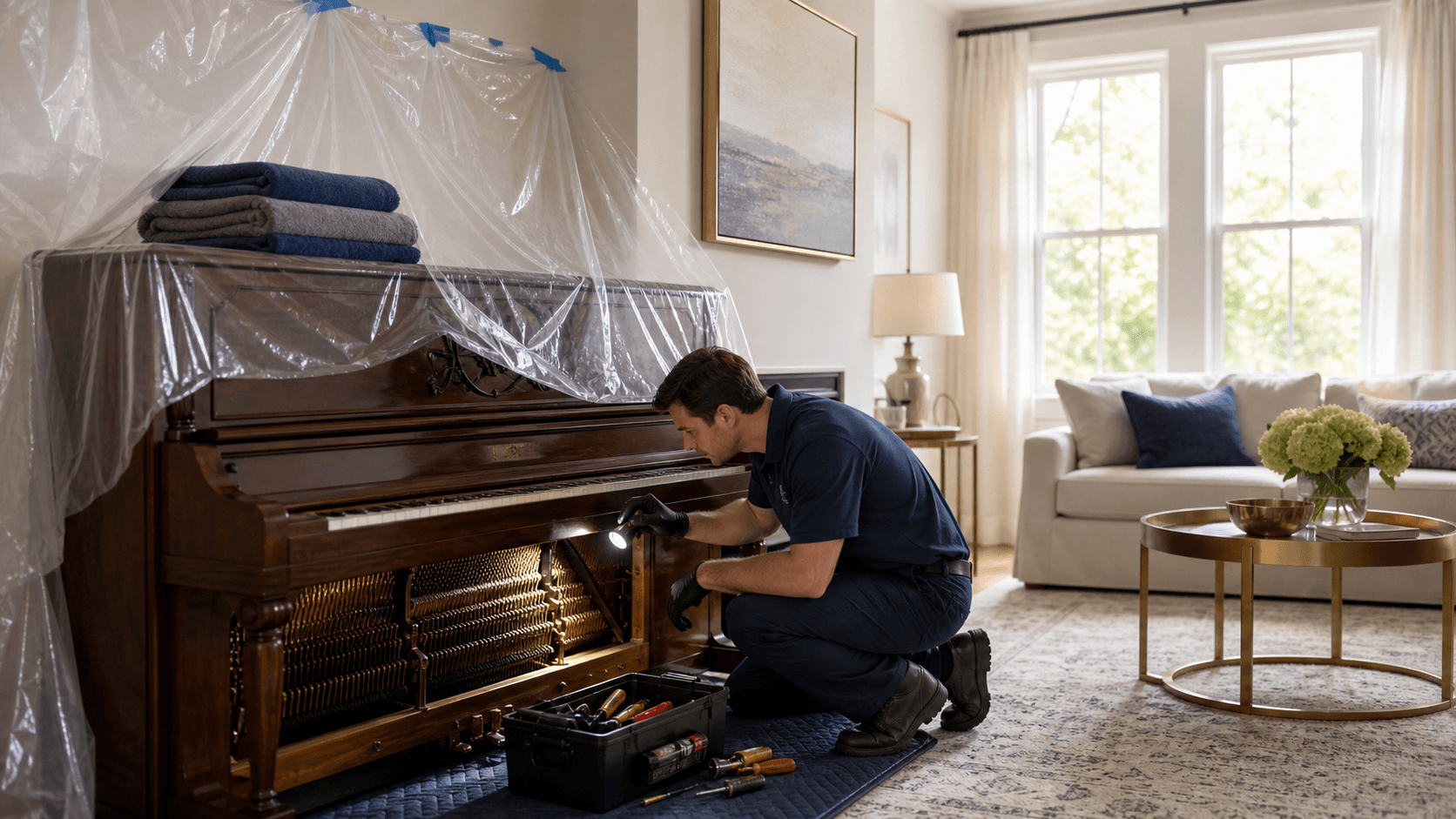
A good voicing visit starts with listening. We want to hear your piano in your room, not in a workshop. The technician will:
- Play across the keyboard at soft, medium, and loud levels
- Ask what kind of music you play, such as classical, jazz, pop, or worship
- Listen for harsh notes, dull spots, and changes in volume and color
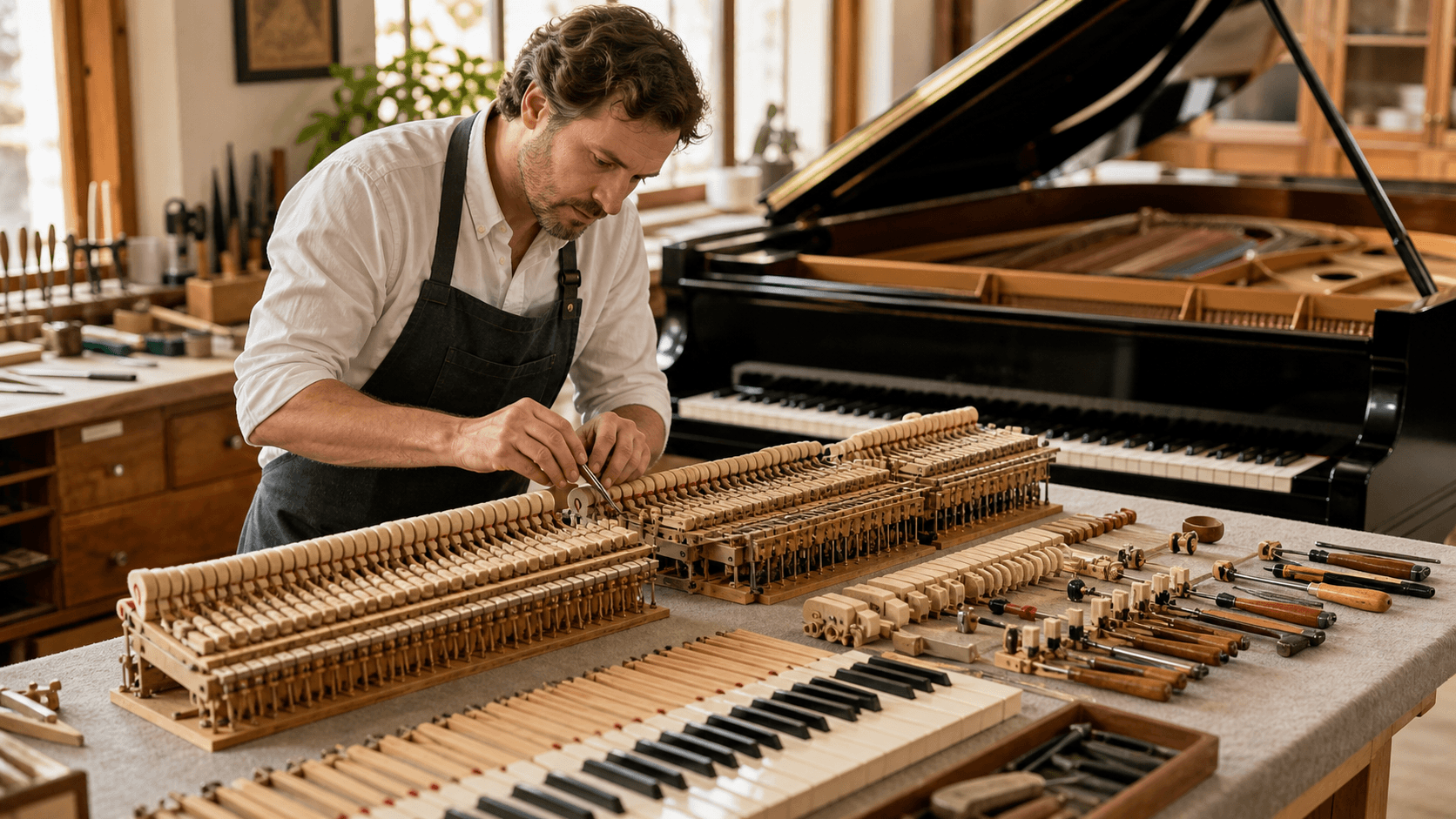
After that, the hands-on work begins. Using small needles, files, and careful adjustments, the technician gently changes the hammers. Needling softens hard areas of felt to reduce harsh brightness. Filing or reshaping removes grooves and restores the proper hammer shape so each strike is clean. Sometimes minor action tweaks are needed so the hammer meets the string in the most efficient way.
This work is gradual, not sudden. The goal is to move your sound toward your ideal tone a step at a time, checking along the way. Voicing is also reversible in many cases. If something is a little too soft or too bright, we can adjust again.
Near the end of the visit, the technician will:
- Play scales, chords, and musical passages across the entire keyboard
- Listen for even volume, smooth color, and clear bass and treble
- Ask you to play and share how it feels and sounds
In our shop in Yorktown Heights, we see how a well-voiced piano can change the way people relate to their instrument. When the tone finally matches what they hear in their head, practice feels easier, and music flows more naturally.
Hear the Full Potential of Your Piano Come to Life
If your instrument sounds uneven, too bright, or lacks warmth, our expert piano voicing services can transform the way it responds and sings. At Ford Piano, we take the time to understand your playing style and tailor the tone of your piano to match it. contact us to schedule a consultation and start shaping the sound you've always wanted.