Rediscovering Your Piano's True Voice
A good piano is more than a piece of furniture; it is a musical partner that shapes how you play and how you listen. When that partner gets older, goes out of tune quickly, or starts to feel heavy and unresponsive, it is easy to assume it needs to be replaced. In many cases, though, a quality instrument can be brought back to concert-level performance through professional piano restoration. The right work can revive the sound, touch, and appearance you remember, often beyond what you thought was possible.
Professional piano restoration goes far beyond a tuning or a minor repair. It is a comprehensive process that addresses the structure, mechanics, strings, and finish of the instrument as a whole. At Ford Piano in Yorktown Heights, New York, our family-owned showroom and workshop serves pianists, institutions, and homeowners who want to unlock the full potential of pianos they already own. In this article, we will walk through what professional piano restoration means, when it is worth considering, how the process works, and how to choose a restoration partner you can trust.
What Professional Piano Restoration Really Means
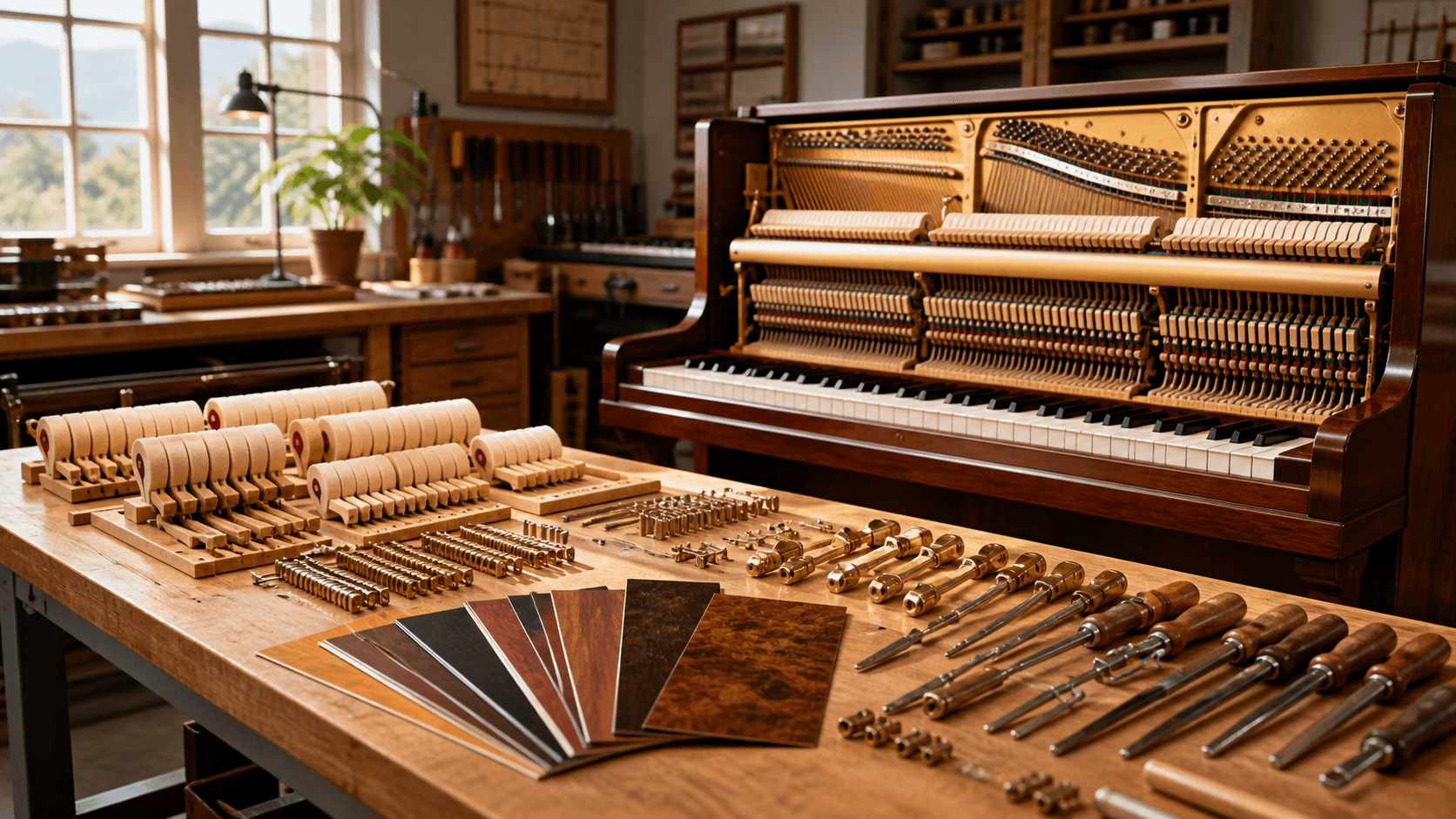
When we talk about professional piano restoration, we are talking about rebuilding the heart of the instrument, not just touching up what you can see. A full restoration typically includes structural work such as repairing or replacing the soundboard and bridges, installing a new pinblock, and stabilizing the frame. It also often includes action and keyboard rebuilding, new hammers, new strings, and refinishing of the case so the piano looks and sounds renewed.
There is an important difference between light repair, partial rebuilding, and full restoration. Light repair might involve replacing a few worn hammers, fixing a couple of sticky keys, or addressing minor cosmetic flaws. Partial rebuilding could cover more extensive action work, new strings, or limited structural repairs while leaving other original components in place. A full restoration, by contrast, treats the piano as a whole system, with careful attention to every part that affects tone, touch, and stability.
True restoration is always focused on musical results, not just appearance. A freshly polished case is nice, but if the structure is weak or the action is worn out, the instrument will never play or sound the way it should. In our workshop, we start by documenting the piano's condition, including measurements, photos, and detailed notes. We then create a personalized plan that respects the instrument's age, maker, and intended use, whether it is for a home, teaching studio, or performance setting.
When Restoration Is Worth the Investment
Not every piano is a good candidate for professional piano restoration. The instruments that tend to benefit most are well-built grands and uprights from respected makers, family heirlooms with strong original construction, and institutional pianos that were designed for heavy use. These pianos often have excellent musical potential hidden under decades of wear.
There are common signs that a piano may be ready for more than just another tuning. You might notice that it will not hold pitch for long, that notes feel uneven or sluggish, or that some keys stick or rattle. The tone might seem thin, harsh, or weak, even after basic maintenance. Visible structural issues, such as cracks in the soundboard or separated ribs, are also signals that deeper work may be needed.
When you compare the long-term value of restoring a well-made older piano with buying a new midrange model, restoration can often be the more rewarding choice. A high quality vintage instrument that is properly rebuilt can offer a richer tone, a more nuanced touch, and a longer lifespan than many new pianos in a similar price range. Sentimental value plays a role too, keeping a beloved family or institutional instrument in use for another generation.
At Ford Piano, our role is to help you evaluate these questions with clear information. We provide honest assessments of condition, explain the range of possible work from modest repairs to full rebuilding, and discuss costs in relation to the piano's musical and personal value. Our goal is to help you decide whether restoration is the right path for your specific instrument.
Inside the Piano Restoration Process
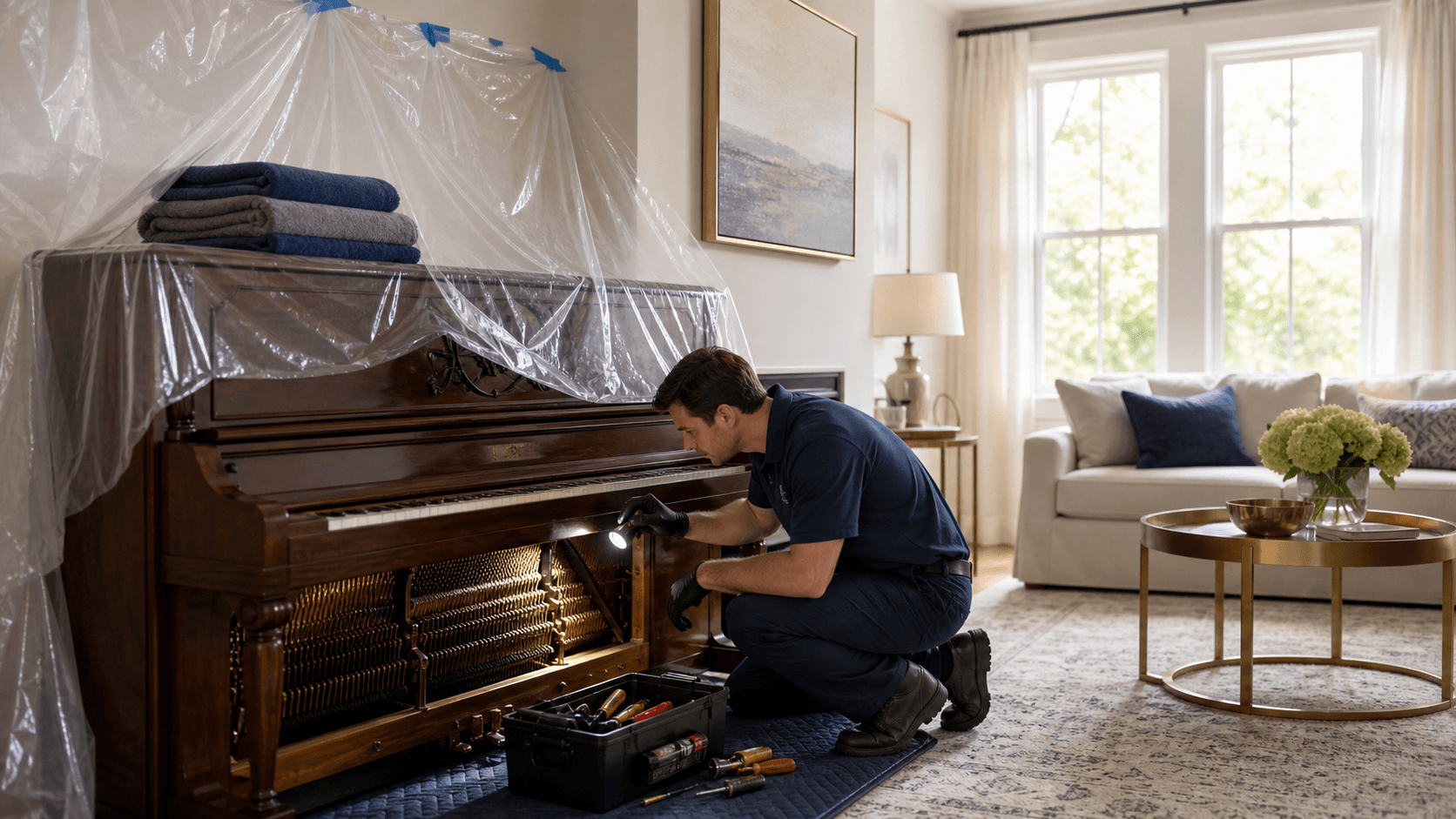
Professional piano restoration is a step-by-step process, each stage building on the last. It typically begins with a thorough inspection and estimate. We examine the soundboard, bridges, pinblock, frame, action, keys, strings, and casework, then outline recommended work and options.
Once a project moves forward, we carefully disassemble the piano. The action and keys are removed, the strings are taken off, and the case is prepared for structural work and refinishing. Structural repairs might include addressing soundboard issues, repairing or replacing bridges, and installing a new pinblock to hold tuning pins securely.
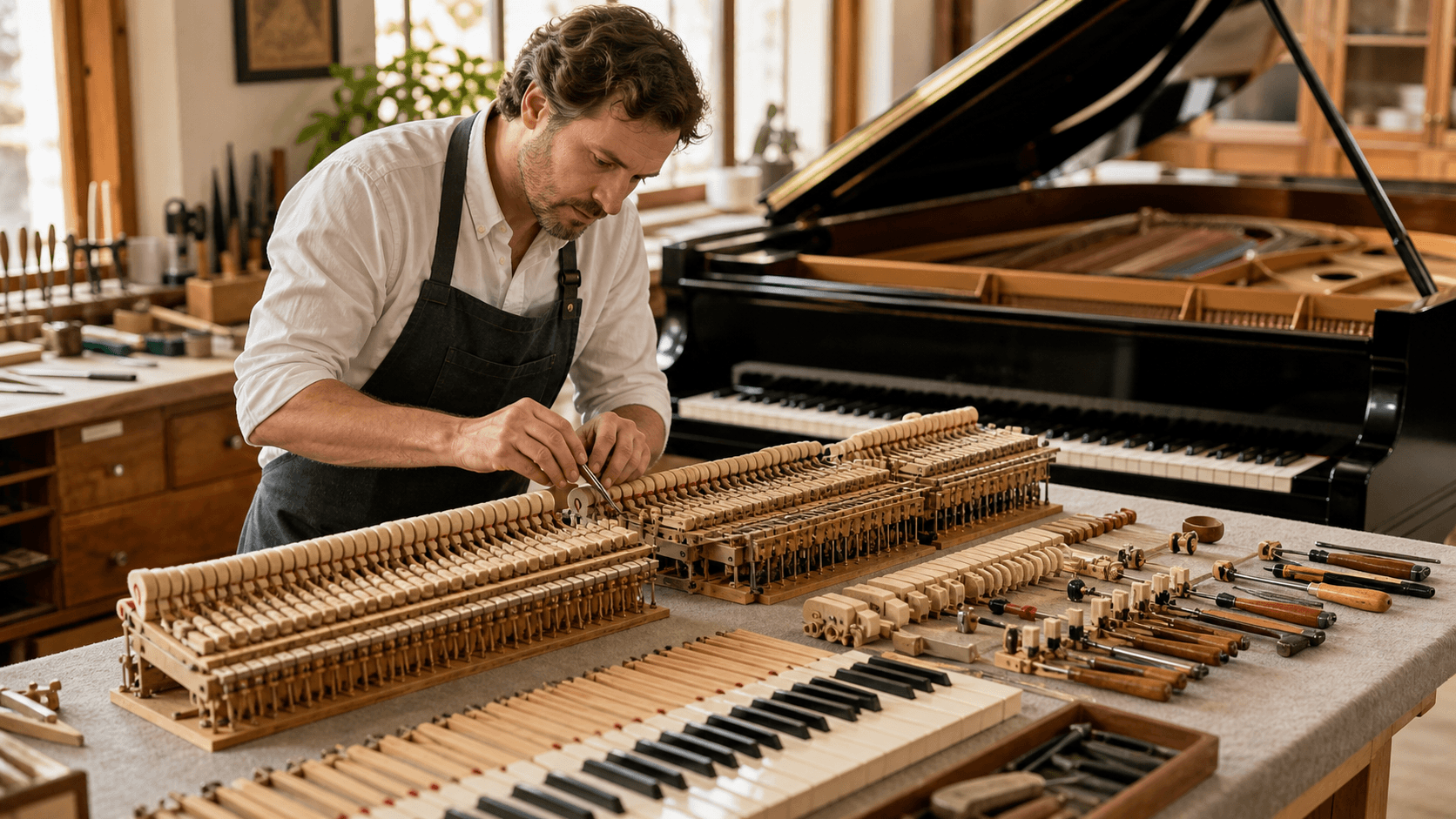
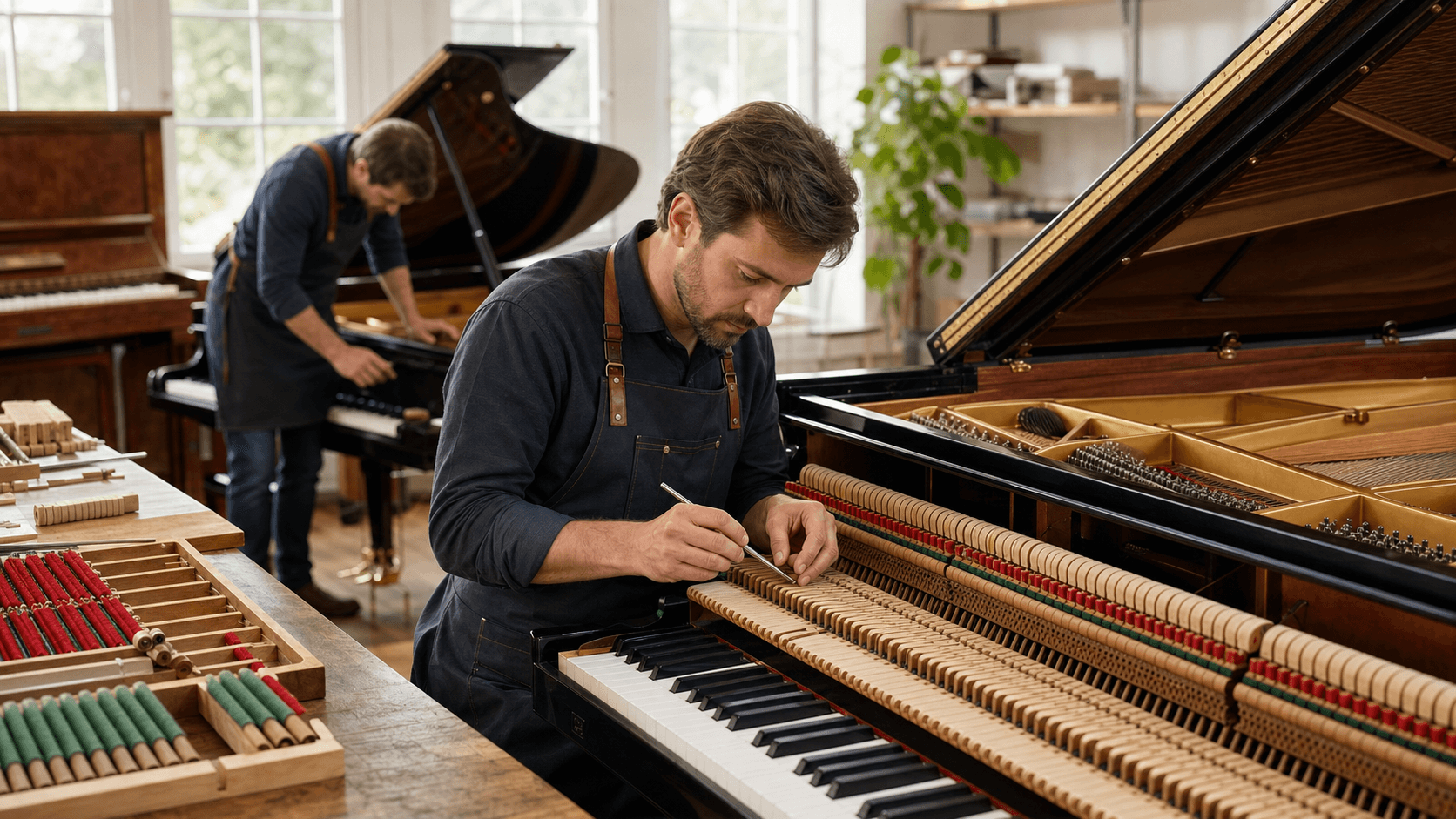
After the structure is sound, we focus on the action and keyboard. This is where the playing feel is shaped. Parts may be replaced or rebuilt, then regulated so that each key responds evenly. Hammers are carefully fitted and voiced so tone is consistent from bass to treble. Restringing gives the piano a fresh, stable foundation for pitch and power. Finally, refinishing restores the visual character of the case, from repairing veneer and hardware to applying a new finish that suits the space where the piano will live.
A professional restoration takes time, and that is a good thing. Wood, felt, and other materials need time to settle, and precise regulation and voicing rarely happen in a single pass. Throughout the process, we keep clients informed about progress so they can see how their instrument is changing. Because our showroom and workshop are together in Yorktown Heights, our family team can coordinate every stage under one roof, from the initial assessment to the final tuning.
How Restoration Transforms Sound, Touch, and Beauty
When a piano has been through professional restoration, the most striking change is often the sound. You can expect a richer, more singing tone, with better sustain and clarity. Volume tends to be more even across the keyboard, and the instrument holds its tuning more reliably because the structural foundation and strings are renewed.
The playing experience changes too. With a rebuilt and regulated action, the keys respond more predictably, making control of dynamics and articulation much easier. Many pianists describe a restored instrument as feeling more connected to their hands, rewarding even the smallest variations in touch. That kind of responsiveness can inspire better practice and more expressive performance.
Cosmetic restoration completes the transformation. A tired, faded finish can be refreshed, veneer damage addressed, and hardware cleaned or replaced. The result is an instrument that looks at home in a living room, teaching studio, or performance hall, instead of something that needs to be hidden in a corner. In our work, we pay attention to balancing authenticity with personal taste, preserving the piano's original character while aligning the finish and details with the owner's current space and style.
Choosing the Right Piano Restoration Partner
Professional piano restoration is a specialty craft, so choosing the right workshop matters. When you are evaluating potential partners, it helps to look for a few key things.
Helpful points to consider include:
- Experience with full restorations of both grands and uprights
- A dedicated workshop space with appropriate tools and equipment
- Clear, written estimates that outline specific work to be done
- Photos or examples of previous restoration projects
- References from other pianists, teachers, or institutions
It is also wise to ask specific questions before committing. For example, what work is included in the quoted price, and what might be additional? How are replacement parts selected and sourced? What kind of warranty or follow-up service is provided after the restoration? How will transport, storage, and climate conditions be handled during the process to protect the instrument?
Whenever possible, we encourage people to visit a workshop and showroom in person. Hearing other restored pianos, seeing in-progress projects, and meeting the technicians who will do the work can give you a much clearer sense of how your piano will be treated. At Ford Piano, our family has built a full-service environment that includes sales, service, rebuilding, refinishing, and moving, and we serve individual pianists as well as institutions across the region who trust us with their instruments.
Get Started With Your Project Today
If you are ready to bring your instrument back to its best, our team at Ford Piano is here to help. Explore how our professional piano restoration services can preserve the character of your piano while renewing its performance. Tell us about your instrument and goals, and we will recommend a clear path forward. When you are ready to move ahead or have questions, simply contact us to schedule a consultation.