When Expert Soundboard Repair Protects Your Investment
When a family or a local school in Westchester hears a new buzz, rattle, or loss of richness from a grand piano, worry sets in fast. A quick look inside shows hairline cracks across the soundboard, and it is easy to think the piano is finished or has lost all its value. That fear is common, especially when the instrument is a high-quality grand or a long-loved heirloom.
The truth is, a damaged soundboard does not always mean the end. The soundboard is often called the heart of the piano because it shapes how the instrument speaks. Its condition affects tone, power, and how the piano feels to play. For many pianos, careful soundboard repair is one of the best ways to protect both sound and long-term worth.
Professional piano soundboard repair in Westchester can often keep the original voice of a fine instrument while stopping damage from spreading. This is especially important for serious players, schools, and performance spaces that depend on a reliable, inspiring piano. As a New York-based restoration shop, we work with owners across Westchester County who want that balance of musical quality and smart long-term care.
How the Soundboard Shapes Your Piano's Voice
The strings on a piano make a very small sound on their own. The soundboard acts like a large wooden speaker. It takes those tiny string vibrations and spreads them through the whole body of the piano. The shape, thickness, and health of that board help decide:
- How warm or bright the tone is
- How long notes ring and sing
- How even the piano sounds from bass to treble
- How well the sound projects into a room
Two pianos from the same maker can sound very different if their soundboards age in different ways. Wood reacts to years of playing, changes in humidity, and simple time. When the soundboard is healthy, the piano feels alive under your hands. When it starts to fail, that life slowly drains away.
Common signs that a soundboard may be compromised include:
- Loss of resonance, where notes feel thin or die off quickly
- Uneven tone between sections of the keyboard
- New rattles, buzzes, or vibrations that were not there before
- Visible cracks in the soundboard surface
- Separation where the ribs meet the board
Not every crack is a disaster. Some hairline cracks can be repaired and made stable for years while keeping the original soundboard in place. The key is to have a specialist look at the instrument early, before small issues become larger structural problems.
When Repair Makes Sense and When It Does Not
Soundboard repair can be a smart choice, but it is not right for every piano. It often makes sense when the instrument is:
- A quality grand piano from a respected maker
- A fine upright used for serious study or teaching
- A family heirloom with strong emotional value
- A piano used in schools, houses of worship, or performance spaces
In these cases, keeping as much of the original structure as possible can help preserve both tone and future resale or appraisal value. Repair can also be part of a larger restoration plan that includes action work, strings, and cosmetic work.
On the other hand, there are times when full rebuilding or soundboard replacement may be a better long-term choice. Examples include:
- Severe structural damage where the crown is lost across most of the board
- Low-quality pianos where even perfect repair would not produce high musical results
- Instruments with many failing parts at once, such as pinblock, bridges, and action
The decision should never be made on one factor alone. A thoughtful evaluation looks at the piano's age, brand, and build quality, how the instrument is used now, and how it will be used in the future, emotional ties to the piano, and the owner's goals and budget. A quick glance at a few cracks is not enough. Careful assessment helps avoid wasting time and money on an instrument that will not meet expectations.
Inside a Professional Soundboard Repair Process
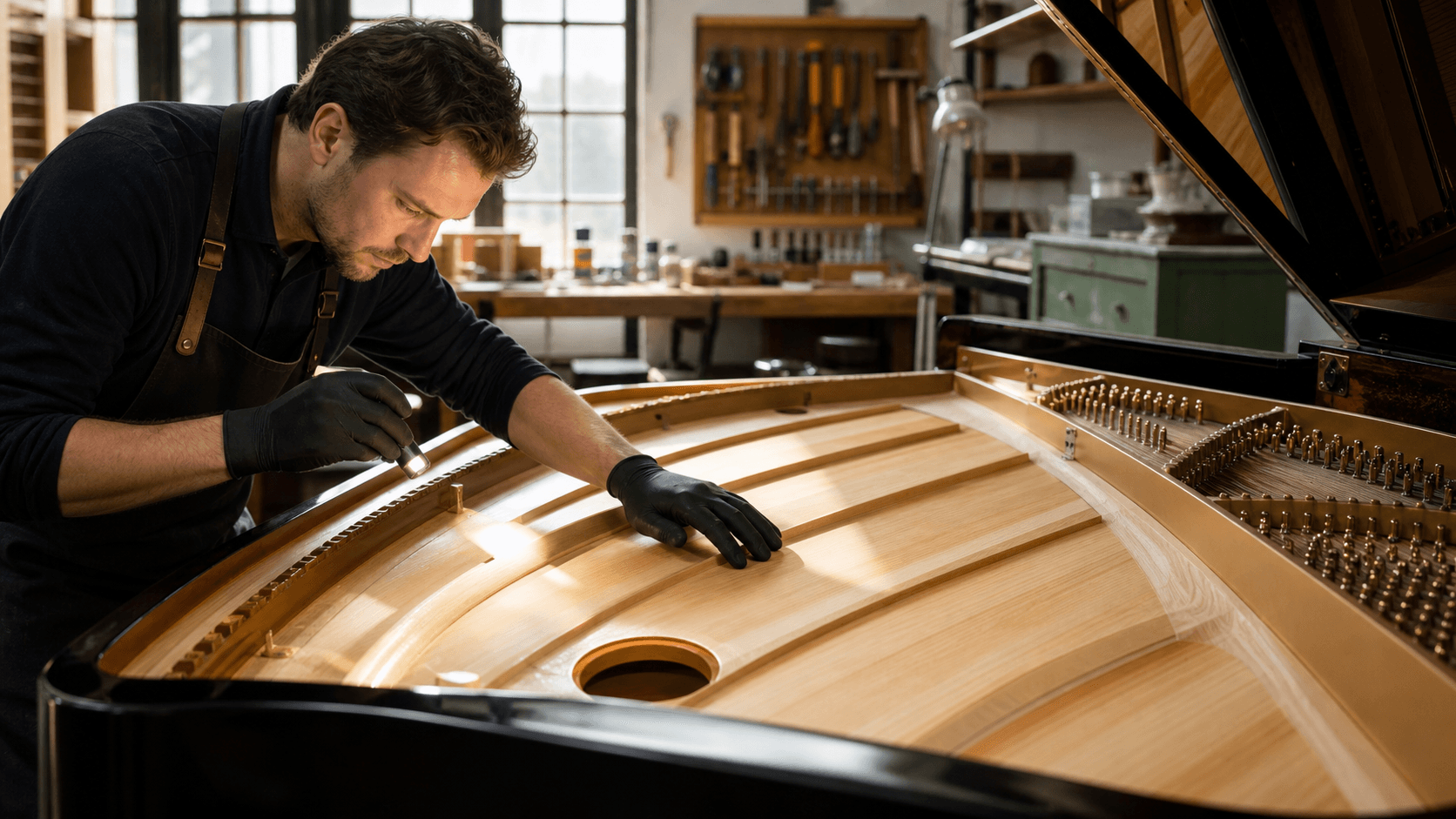
High-level piano soundboard repair is more than just filling cracks. In our shop, the process usually starts with a detailed inspection. We look at:
- The pattern and depth of cracks and how far they spread
- The crown of the board, meaning its slight upward curve
- The grip and condition of ribs, including any loose joints
- The bridges, which carry string vibration into the board
- Signs of past water damage or extreme dryness
This inspection guides the repair plan. Common steps can include careful cleaning and opening of cracks, fitting and gluing wood shims to close gaps, re-gluing or, when needed, replacing loose ribs, checking and repairing any bridge splits or loose bridge caps, and sealing and refinishing the soundboard surface to protect the wood while respecting the original build.
Control of the environment is a big part of this work. In Westchester, summers are humid and winters are quite dry indoors. Wood swells and shrinks with those swings. During repair, we keep the piano in a stable climate so the soundboard can be repaired at a target moisture level. This helps the work hold up once the piano returns to a home, school, or hall.
Seasonal Timing and Longevity of Soundboard Repairs
Many owners in our area find that late summer is a helpful time for a soundboard evaluation. By that point, the piano has gone through peak humidity, and any seasonal swelling or sticking has shown itself. As humidity starts to shift, we can see how the soundboard has handled the stress and plan needed repairs before the very dry indoor air of winter arrives.
After repair, how the piano is treated at home has a big effect on how long the work will last. Helpful steps include:
- Keeping the piano away from direct sun, radiators, and AC vents
- Using guided humidity control in the room when possible
- Having regular tunings so a technician can monitor stability
- Avoiding big, fast changes in room temperature
With good care, a well-repaired soundboard can keep an instrument singing for many years. Tone stays more stable, the action feels more predictable, and the piano holds tuning better. For owners who may one day appraise or sell the piano, that ongoing health can make a clear difference.
Protecting Your Piano's Voice with Expert Local Care
When a piano in Westchester starts to buzz, sound dull, or show visible soundboard cracks, it is easy to fear the worst and give up on it. In many cases, that is not necessary. Careful inspection and skilled repair can protect the voice and value of a quality instrument, especially when issues are caught early.
Our team at Ford Piano has long experience with restoration, rebuilding, refinishing, and service for discerning piano owners, schools, and performance spaces across Westchester County and the New York area. By pairing careful evaluation with a full range of repair options, we help owners choose a path that fits their instrument and their goals, so the piano they love can keep making music for a long time.
Get Started With Your Project Today
If your piano is losing power, clarity, or resonance, we are ready to help bring its voice back. Learn how our technicians approach piano soundboard repair in Westchester and what we recommend for your specific instrument. At Ford Piano, we take the time to evaluate your piano carefully and explain your options in plain language. Have questions or ready to schedule an appointment? Just contact us and we will follow up with convenient next steps.