When Your Piano Emergency Cannot Wait
When something goes wrong with a piano, it often happens in a split second and with a loud noise. A string snaps, a leg shifts, the lid slips from your hand, or water drips where it never should. In a home, school, or venue, these moments feel stressful, but what you do in the first few minutes can make a big difference.
A "piano emergency" is any sudden problem that affects safety, stability, or serious damage. That can include a broken or hanging string, a leg that cracks or collapses, a dropped key cover or lid, a move that goes wrong on stairs, or water exposure from a leak or storm. In Westchester homes and performance spaces, we see all of these.
Quick, calm action helps you do three things: protect people and pets, keep the damage from getting worse, and protect the long-term value of the piano. In the next sections, we will walk through how to make the area safe, easy steps for temporary stabilization, what to leave alone, and how to decide if you need emergency piano repair in Westchester or a professional mover first.
Make the Area Safe Before You Touch the Piano
The very first job is safety. A damaged piano can be heavy, sharp, and unstable, so take a breath and slow down before you grab anything.
Start by clearing the room as much as you reasonably can:
- Move children and pets out and close the door if possible
- Ask guests or students to step back, especially if the piano is on wheels or a platform
- Keep people from standing under a raised lid or leaning on a wobbly corner
Never try to lift a toppled upright or grand by yourself. Even a small upright is far heavier than it looks. If the piano is leaning, tipped, or has rolled on its casters, treat it like a piece of heavy furniture that could shift without warning.
If water is involved, pause and think about electricity. Late summer storms and surprise leaks are common in our area, and pianos often sit near outlets and power strips. If you see water near cords or outlets, or on the floor under the piano, it is safer to:
- Turn off electricity to that room at the panel, if you can do so safely
- Unplug any devices in the area only if the outlet and floor are dry and easy to reach
- Keep any fans or dehumidifiers away from standing water
In the first 10 to 15 minutes, focus on looking, not fixing. Avoid:
- Playing the piano to "test" it
- Tightening or loosening strings
- Forcing stuck keys or pedals
- Dragging or rolling a shaky piano across the floor
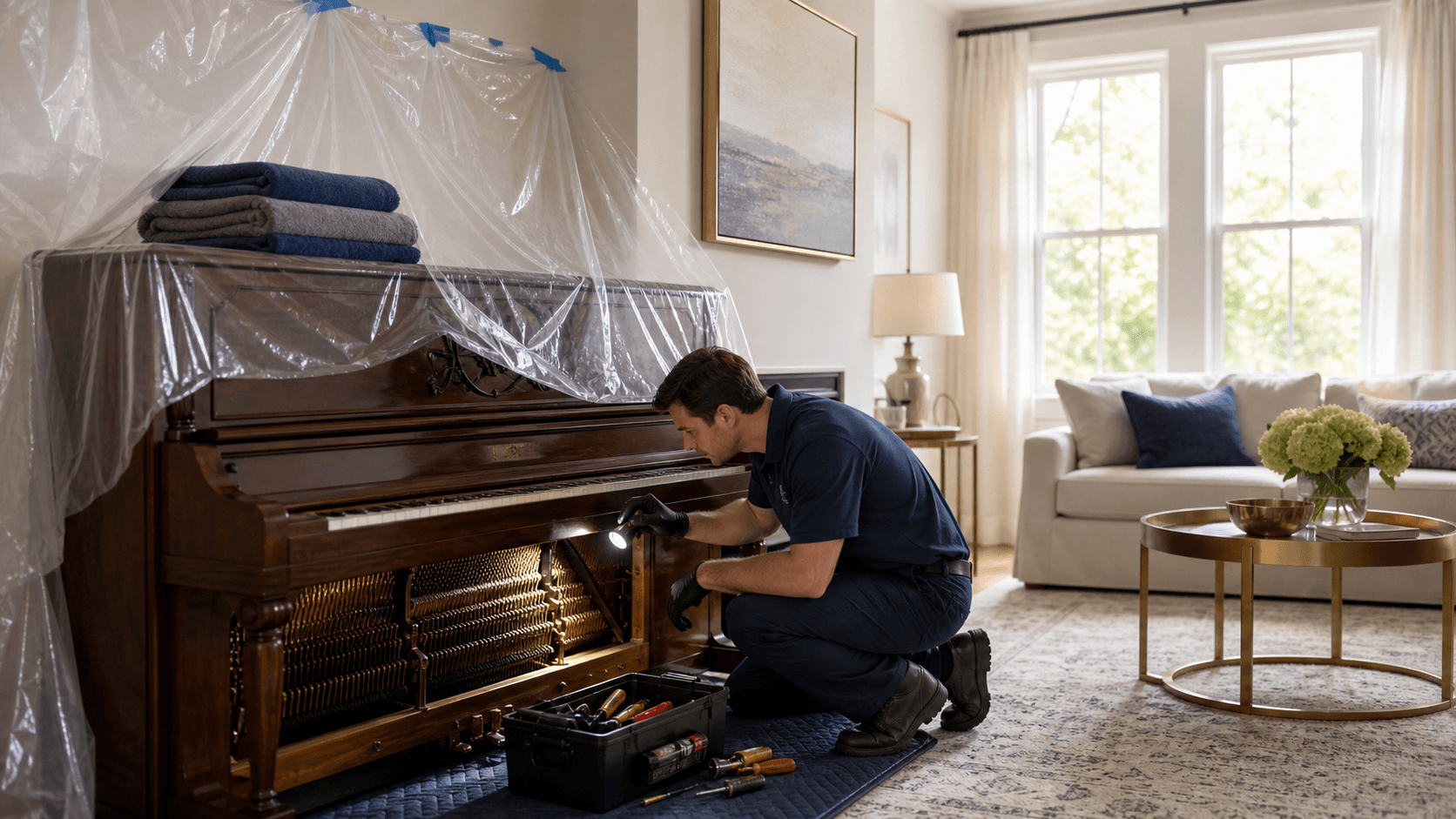
Instead, stand at a safe distance and do a slow visual scan. Take photos from a few angles. These can help with insurance and will also help a technician understand what has happened before they arrive.
Temporary Stabilization You Can Safely Do Yourself
Once the room is calm and safe, there are a few simple things most owners can do to keep damage from getting worse. The goal is to stabilize, not repair.
For physical support issues, you can:
- Gently slide sturdy books or wood blocks under a leg that is starting to lean but has not fully broken
- Place folded towels or blankets over sharp or broken edges to prevent cuts
- If the top lid is still aligned and easy to reach, close it slowly to protect the inside, then leave it alone
If the emergency involves minor water exposure, like a splash from a nearby spill or a light drip that you caught quickly, you can:
- Blot visible moisture on the finish with a soft, dry cloth
- Set fans in the room at a distance to improve airflow, not pointed directly into the piano
- Lower indoor humidity with AC or a dehumidifier, again kept at a safe distance
Do not use hair dryers, heat guns, or direct sunlight to speed up drying. Sudden heat can warp wood and finishes and can turn a small problem into a large one.
Some problems can usually wait for a regular appointment, such as:
- Buzzing notes that appeared after a humidity change
- A few sticky keys that still move, just more slowly
- Minor squeaks or rattles that are not tied to a fall or impact
Other situations call for same-day or next-morning help from a technician, including:
- A dropped key cover or lid, especially if it bent the hinges
- A broken string that is hanging loose inside the piano
- A leg that has partially collapsed or a lyre (pedal assembly) that has shifted
- Any visible crack or shift where the piano looks like it could lean further
In those cases, light stabilization is fine, but then it is time to stop and wait for professional help.
When to Call an Emergency Technician vs. a Mover
Not every piano emergency is the same, and not every professional handles the same work. In general, a piano technician focuses on the piano itself, while a piano mover focuses on where and how the piano is sitting.
A technician handles:
- Internal damage like strings, hammers, keys, and action parts
- Problems with the soundboard, pinblock, and tuning stability
- Pedals that are stuck, dead, or making new noises
- On-site repairs and careful stabilization once the piano is safe to work on
A mover handles:
- Pianos that have shifted, rolled, or are leaning dangerously
- Instruments stuck on stairs or in tight hallways after a move gone wrong
- Relocating a piano out of a room after flooding or structural damage
Here is a simple way to decide:
- If the piano is standing safely on its legs, and the main issue is how it plays or sounds, start with an emergency piano repair in Westchester
- If the piano is not stable, is blocking a doorway, or is stuck on steps or a platform, call a professional mover before anyone plays or pushes it
Some situations need both. After heavy water damage or a storm, the piano might need to be moved to a dry, stable space before any repair starts. If a leg or lyre collapses while moving up or down stairs, movers should first make the piano safe and upright. Then a technician, like our team at Ford Piano in Yorktown Heights, can inspect for internal and structural damage.
Protecting Your Piano Through Westchester's Seasons
Many emergencies begin as small stresses over time. Our local climate, with humid summers and dry winters, is hard on wood, glue joints, and action parts. Rapid swings in temperature and moisture can make keys swell or shrink, affect tuning, and put extra strain on strings and soundboards.
You can lower the risk with a few habits:
- Keep the piano away from windows, doors, and radiators
- Avoid direct blasts of AC or heat on the case
- Use gentle humidity control, like a room humidifier or dehumidifier where needed
- Have regular tuning and checkups so small issues are caught early
- Make sure any room changes or moves are handled by trained piano movers
Ongoing service and careful moving help prevent sudden failures, such as legs loosening over time or action parts wearing until they finally stick or break during a performance. When the same team cares for your piano year after year, they get to know its quirks and can often spot warning signs before they turn into late-night emergencies.
Your Next Step When a Piano Emergency Strikes
When something goes wrong, a simple checklist helps keep things under control: secure the area, check for water and power issues, and keep people away from any part of the piano that looks unstable. Take clear photos, do only light stabilization you feel safe doing, and avoid tools, force, or do-it-yourself repairs.
Then decide which problem you have. If the piano is standing solidly but sounds wrong, looks bent at the hinges, or has loose internal parts, an emergency technician is usually the next call. If the piano is leaning, stuck, or has moved in a way that puts people at risk, a professional mover should come first, followed by a technician for a full evaluation.
Having your piano's brand and serial number written down, and having a trusted service provider like Ford Piano saved in your phone, can make those stressful moments much simpler. With calm steps and the right help, most emergencies can be stabilized, damage can be limited, and the piano can return to making music for many years to come.
Restore Your Piano's Sound With Fast, Reliable Care
When an unexpected issue leaves your piano unplayable, we are ready to help with prompt, professional service. For priority diagnostics and repair, explore our emergency piano repair in Westchester options so you can get back to playing with confidence. If you prefer to speak with someone directly, simply contact us and a Ford Piano technician will walk you through next steps.