Hidden Risks of Cheap Used Grand Pianos in Westchester
Buying a used grand piano in Westchester can seem like a smart shortcut. You see a shiny case, clean keys, and a low price, and it feels like you found a treasure. But what you cannot see at first glance is often what matters most for how the piano will sound, play, and hold up over time.
In this article, we want to walk through the problems that hide under pretty finishes, why so many "deals" turn into headaches, and how to shop in a way that protects your budget and your music. Whether you are a parent, a teacher, or running a school or house of worship, knowing what to watch for can save you from years of frustration.
What Shoppers Miss When a Used Grand Piano Looks "Perfect"
Summer in Westchester often brings moves, downsizing, and estate cleanouts. That's when listings for used grand pianos pop up everywhere. Photos show glossy lids, polished pedals, and descriptions like "barely used" or "just needs tuning." However, those photos rarely capture the condition of the inside of the piano, where many expensive problems begin.
What the pictures often fail to reveal are issues such as: worn action parts that make the keys feel heavy, slow, or uneven; structural issues hidden under the plate and soundboard; soundboard and bridge damage that kills tone and tuning stability; and rust or corrosion inside the piano that shortens its life.
A grand piano is a complex machine, not just a beautiful piece of furniture. When the internal parts are tired or damaged, you may end up paying for extra tunings that still do not hold, ongoing repairs just to keep it playable, and major rebuilding work that costs far more than the "deal" price.
From our point of view, a grand piano should be a long-term musical partner. If you choose the wrong used grand at the start, it can quietly drain money and energy for years.
The Hidden Structural Problems That Kill Value
The heart of any grand piano is its structure. The way the frame, wood, and strings work together determines how long it will stay stable and musical. Some of the key parts include the rim and plate (the main frame that holds the entire piano together), the pinblock and tuning pins (which control tuning stability), the soundboard and ribs (which create the piano's voice), and the bridges and strings (which carry the sound from string to board).
Common problems we see in cheap used grand pianos in Westchester include:
- Cracked soundboards that cause buzzing or weak tone
- Loose tuning pins and failing pinblocks that will not hold pitch
- Bridges that are split or lifting, breaking the link from string to soundboard
- Rusted or heavily tarnished strings that sound harsh or dull
- Warped action parts that make touch inconsistent
Age alone does not tell the full story. A younger piano stored in a damp basement can be in far worse shape than an older one that was cared for in a stable living room. Once these structural parts go bad, bringing the instrument back to reliable use often calls for serious rebuilding.
That is where the "free if you move it" or too-good-to-be-true price can hurt. By the time you pay to move, inspect, repair, and partially rebuild, you could be far past the cost of a properly reconditioned grand that was vetted from the start.
How Poor Rebuilds and DIY Fixes Ruin a Grand Piano
Not every shiny used grand has its original factory parts. Many have been worked on, sometimes well, but often in ways that hurt long-term performance. There is a big difference between expert rebuilding and quick cosmetic flips, and the difference usually shows up both in the workmanship and in how the piano feels and sounds.
Problem signs often include parts that were swapped without proper fitting or regulation, mixed brands of action parts that do not match the piano's design, plates that have been stripped or painted in a rough way, cabinets that were sprayed over without fixing underlying damage, and pinblocks that were drilled or altered without correct techniques.
From the piano bench, these shortcuts can translate into clear playing and sound issues, such as uneven key dip, inconsistent touch, noisy actions with clicks or rattles, dead spots in the scale, tone that is jarringly bright or overly dull and does not blend across the keyboard, and even misaligned lids, fallboards, or hardware that signal rushed work.
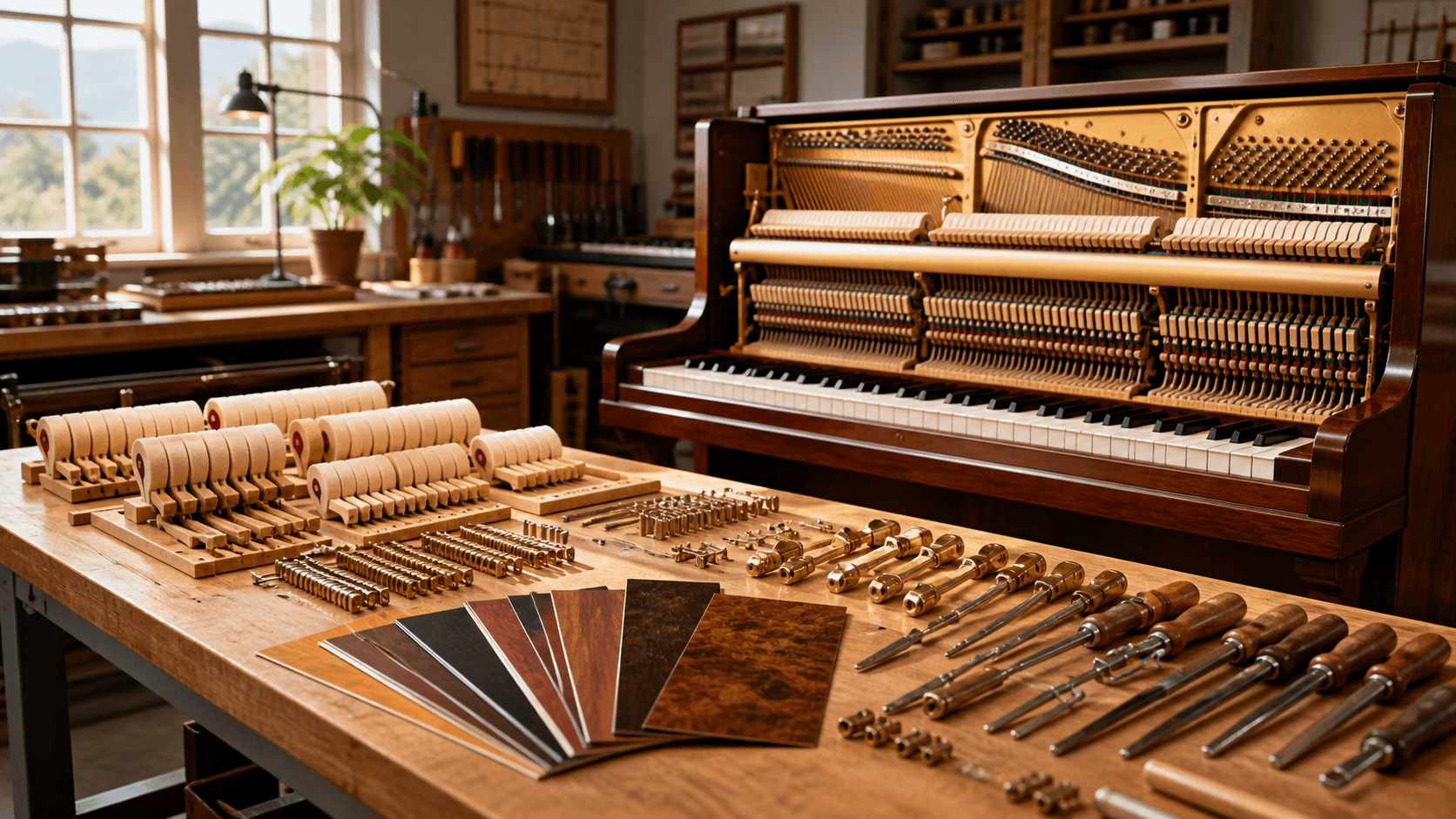
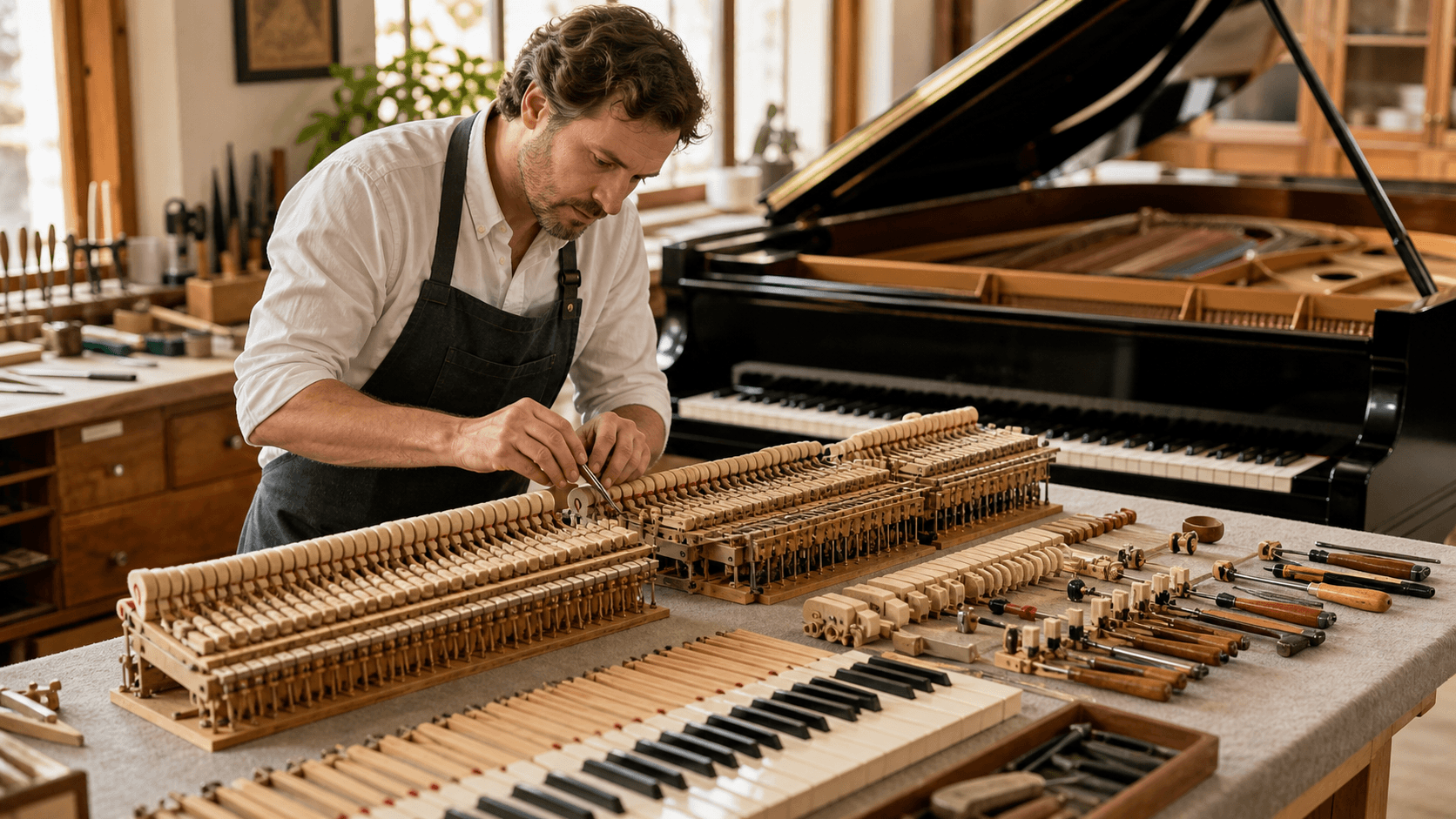
At Ford Piano, our rebuilding happens in-house here in New York. That lets us control every step, from selecting quality parts to matching factory-level specifications. We take time with regulation and voicing so the instrument responds evenly, which matters a lot for serious students, teachers, and performers who need control, color, and reliability.
Why Online "Deals" in Westchester Often Cost More Later
These days, many people start their piano search on Facebook Marketplace, Craigslist, or local community boards. During summer moves in Westchester, those feeds can be full of used grand pianos that look tempting. The challenge is that these listings rarely spell out what it will actually cost to get the instrument into dependable playing condition.
Typical surprise expenses include:
- Professional piano moving, often with extra fees for stairs or tight spaces
- Urgent repairs found after the first real tuning
- Multiple tunings because old pianos need time to settle
- Action work to fix sluggish, uneven, or noisy keys
- Partial rebuilding to deal with deeper structural issues
By the time all that is done, many buyers discover they could have chosen a vetted, warrantied reconditioned grand with known history and clear expectations for lifespan. Buying through a reputable showroom gives you:
- Transparent condition reports
- Accurate information on age, brand, and design
- Honest guidance on how long the piano is likely to last in your home or institution
- Choices that match your budget and musical plans
That is the kind of clarity we aim to provide in our Yorktown Heights showroom.
When a Used Grand Is Worth Saving and When It Is Not
Not every older or damaged grand should be written off, and not every "free" grand is a bargain. A skilled technician can help sort the difference between a great rebuilding candidate and a money pit.
Things we look at include brand and design quality at the time it was built, overall structure (especially rim, plate, and soundboard), pinblock and tuning pin condition, bridge health and string condition, and the level of wear in the action and keys.
Rebuilding is often a strong investment when:
- The piano is a high-quality American or European grand
- The core structure is solid, even if cosmetics and parts are tired
- The instrument has family or institutional history worth preserving
On the other hand, walking away is usually smarter when:
- The plate is cracked
- The rim or structure is heavily compromised
- Multiple core parts like soundboard, pinblock, and bridges are all failing
- The original design was low-grade to begin with
At Ford Piano, we rebuild and restore instruments that make musical sense for long-term use. We are also very direct with Westchester clients when we see a piano that should not be repaired, even if they can get it for nothing.
How to Safely Shop for a Used Grand Piano in Westchester
If you are thinking about a used grand piano in Westchester, a simple game plan can protect you from trouble. The goal is to gather basic history, check for obvious red flags, and then confirm the true condition before you commit money to moving or repairs.
Start with a short checklist:
- Ask about brand, model, and estimated age
- Ask where the piano has been kept and how often it was tuned
- Look for water damage, rust, or heavy sun fading
- Check that every key plays and returns properly
- Listen for buzzes, rattles, or notes that sound "off" or weak
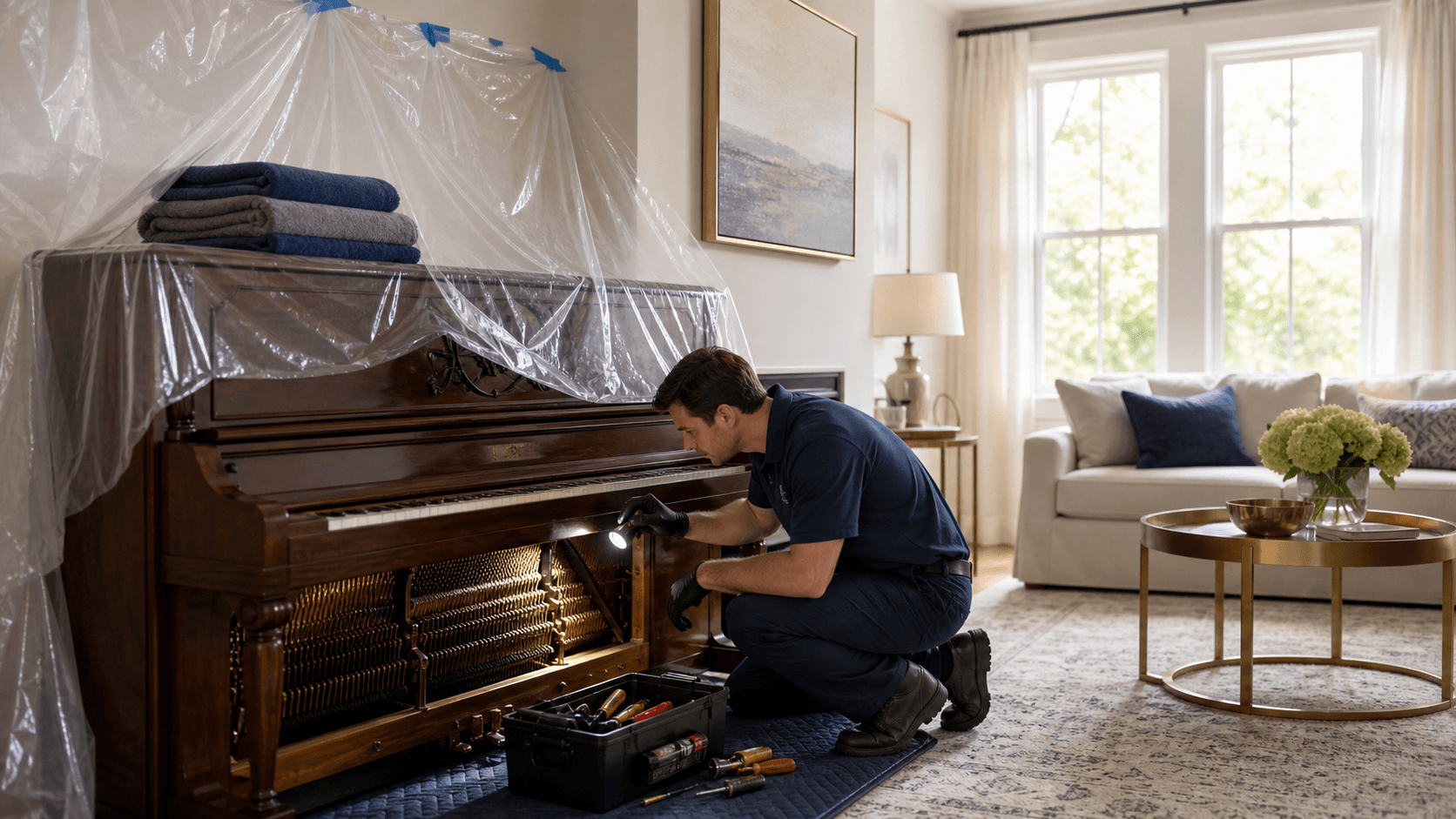
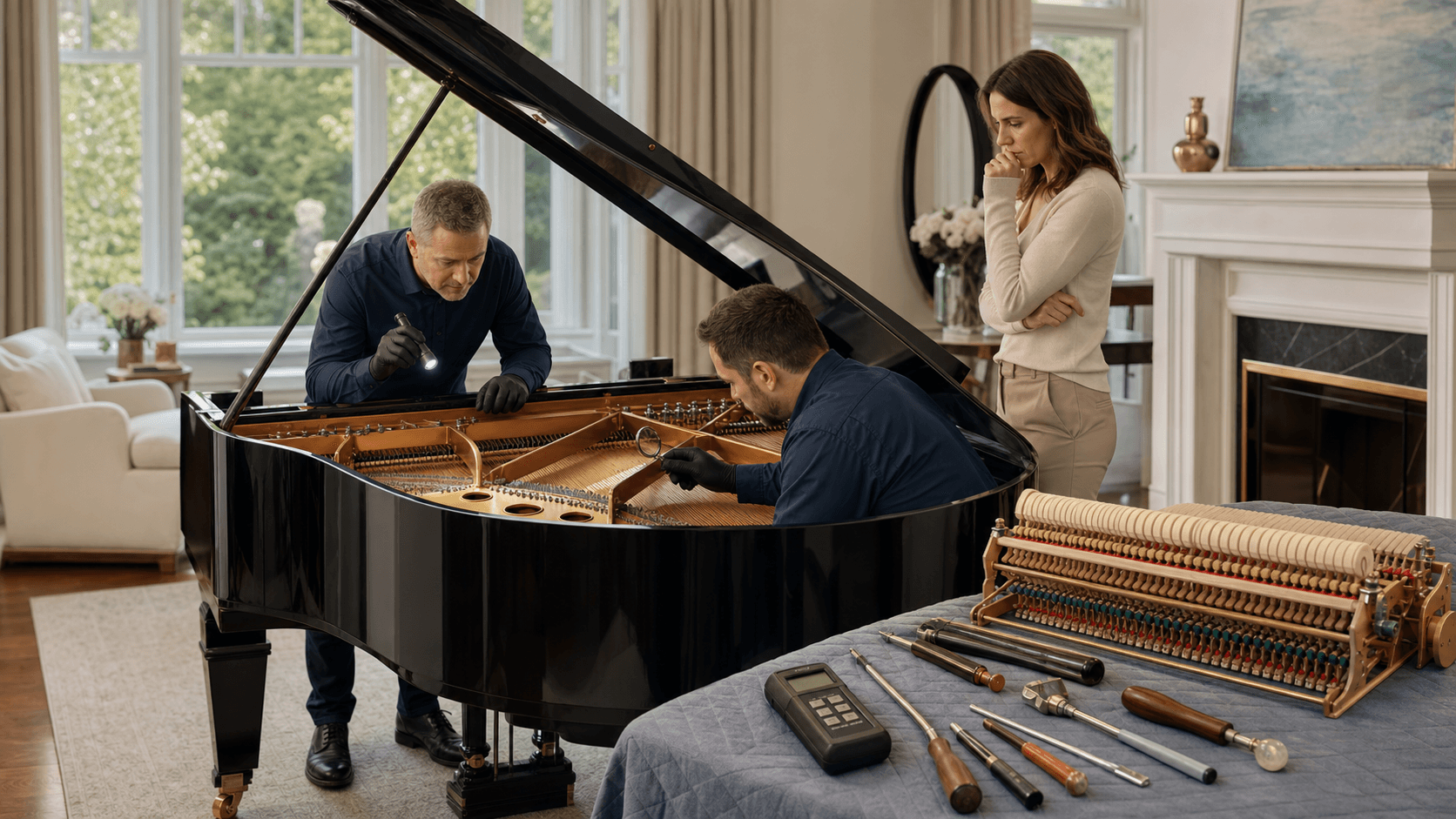
Then, before you commit, bring in a qualified piano technician for a pre-purchase evaluation. A trained eye and ear can spot structural problems that photos and casual visits miss, estimate what work is needed to make the piano reliable, and help you compare that repair plan with other options.
One of the best ways to understand value is to compare a "mystery" private-sale grand with instruments that have already been inspected and reconditioned. When families, teachers, and institutions come to our showroom, they can feel the difference between a tired grand and one that has been properly prepared, and they usually hear it right away in the first few chords.
Find Your Ideal Grand Piano With Expert Local Guidance
If you are searching for a used grand piano in Westchester, we are ready to help you choose an instrument that fits your space, budget, and musical goals. At Ford Piano, we carefully select and prepare every piano so you can feel confident in your investment. Tell us what you are looking for, and we will walk you through the options, from first visit to final delivery. Have questions before you stop by? Simply contact us and we will be glad to assist.