How to Decide If Your Family Piano Is Worth Restoring
A family piano can hold a lot of feelings. It might be the sound of childhood lessons from the next room or the place guests gather when they visit your Westchester home. When that same piano is now out of tune, scratched, or barely playable, it can be hard to know whether to invest in rebuilding it, repair it more lightly, or replace it with a better-suited instrument.
We see this question often as people get their homes ready for visitors and want music back in the house. The hard part is sorting out two very different things: how much the piano means to you and what role it should play in your home going forward. Our goal is to give you a simple way to look at both so that, before you speak with piano rebuilding and sales professionals in Westchester, you already have a clear sense of what makes sense for your piano and your budget.
Sentimental Value: Honoring the Story Behind the Piano
Sentimental value is everything the piano represents that does not show up in a price guide. It is the song that was always played on birthdays, the hours of practice, the quiet comfort of seeing it in the corner of the room. Many family pianos in this area have seen decades of holidays, lessons, and gatherings.
To gauge how strong that pull is, ask yourself:
- Who played this piano most, and what memories are tied to them?
- Is it part of long-standing family traditions?
- Does someone in the family want to keep playing this specific instrument?
- Would you feel real regret if the piano left the house?
If the answers point to deep emotional ties and an active future, you may be more open to a larger restoration, such as a full rebuild. If the piano feels more like a nice piece of family history that no one will actually use, a smaller repair and refresh can still honor the story without a major investment.
It also helps to be honest about limits. Love for the instrument does not change its structure, brand, or age. Sometimes the best way to honor a piano is a careful cleaning, a few repairs, and then passing it on or replacing it with a more suitable piano from a dealer. Other times, when the piano is both meaningful and a good musical candidate, a comprehensive rebuild turns it into a true heirloom that can serve for many more decades.
Understanding Your Piano's Practical Role and Potential
When weighing restoration against replacement, it helps to think about the practical role you want the piano to play in your home, and the instrument's potential to fill that role once properly rebuilt or repaired.
Questions to consider include:
- Will it be used for serious study, casual playing, or mainly as a visual centerpiece?
- Is there a current or upcoming player in the household who needs a responsive, reliable instrument?
- Do you foresee this piano staying in the family for another generation or more?
- Does the piano's size and style fit your current and future home?
If you want a dependable, musically capable instrument for lessons or regular playing, then prioritizing structural health and action quality becomes essential. For that, a full rebuild or choosing a higher-quality replacement piano from a sales inventory may be more appropriate than a light cosmetic fix.
Matching Restoration Scope to Realistic Goals
Once you understand both your feelings and the piano's potential, the next step is to pick the right level of work. Most projects fall into three general paths.
- Light repair and regulation
This might include minor action work, replacing a few worn parts, tightening hardware, and basic cleaning. It is often enough to make a tired but decent piano pleasant to play again, without changing its core character. This level can be suitable when you want a functional instrument but do not expect it to perform like a higher-end upright or grand.
- Partial restoration
Here, more extensive sets of parts are addressed, such as action rebuilding, strings, or moderate case work. The goal is better touch, tone, and appearance for regular home use. Partial restoration can be a good fit when the piano has reasonable potential but does not justify a full concert-level rebuild.
- Full rebuilding and refinishing
This is a top-to-bottom approach, often involving new strings, action parts, soundboard and bridge work when needed, and full case refinishing. It makes the most sense for higher-quality grands and uprights that have strong musical potential or deep family meaning and are expected to serve as long-term instruments.
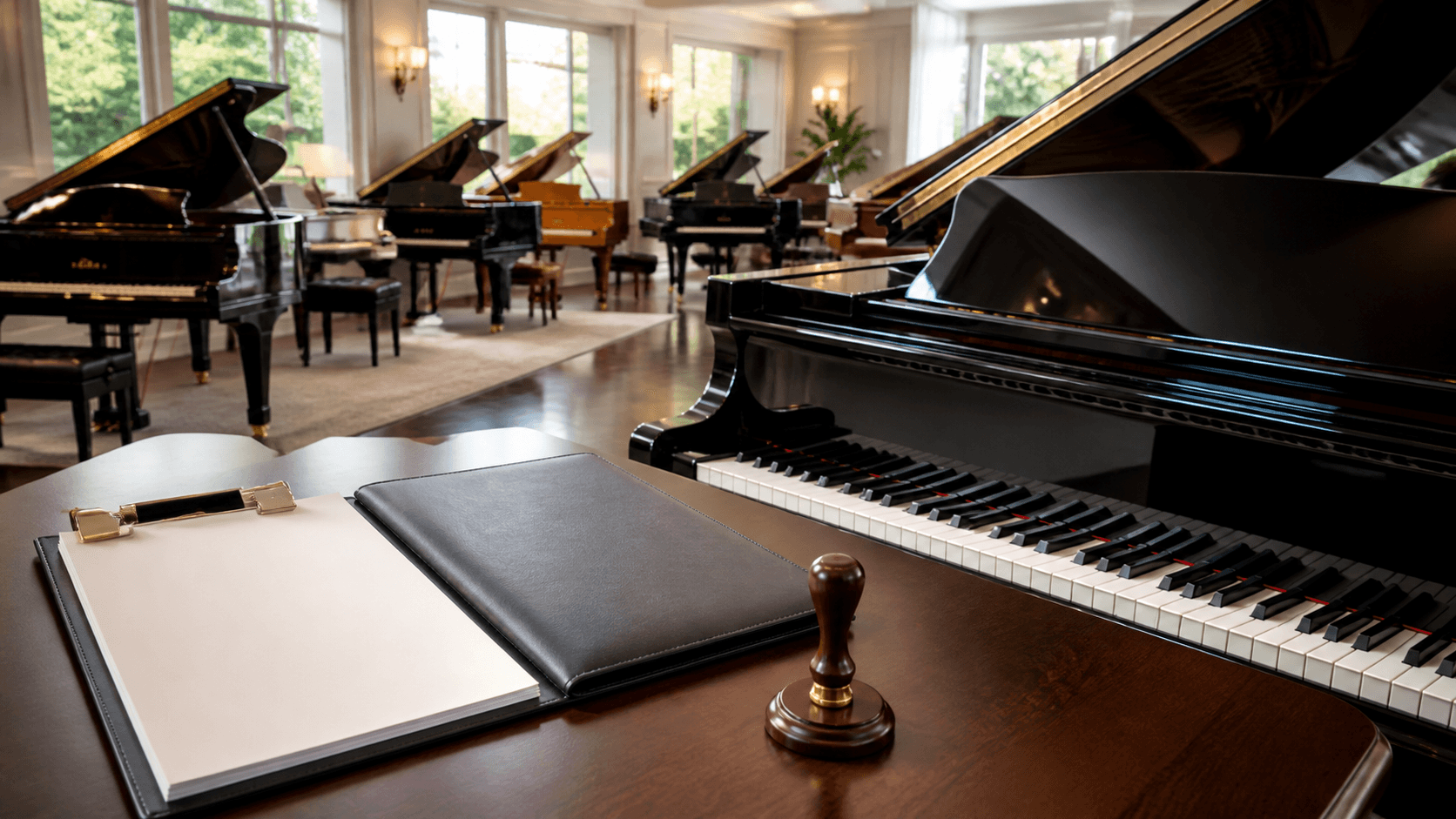
Local housing style plays a role too. Many Westchester homes favor compact uprights for space. Townhouses might want the look of a baby grand without the footprint or weight of a concert grand. Restoring a very small spinet to an extreme level rarely makes sense, because the design itself limits long-term performance, even if the memories are strong. In those cases, stepping into a better-quality pre-owned or rebuilt piano from a dealer's sales inventory can be the more effective choice.
How to Set a Smart Restoration or Replacement Budget
Before you contact a shop, it helps to have a private budget range in mind. One simple way to think about it is to balance three things equally:
- What you are comfortable investing in a long-term instrument (rebuild or replacement).
- Your household comfort level financially.
- The sentimental "weight" of the piano in your family.
Write down what matters most. For example:
- "We want a reliable, nice-looking piano for kids' lessons."
- "We want to preserve this exact grand as a centerpiece for gatherings."
- "We mainly care that it plays well again, looks good enough, and fits our home."
Then decide what is non-negotiable. Structural stability and a dependable action should always come before cosmetic details. Once the piano is solid and enjoyable to play, refinishing, new hardware, and other visual upgrades can be added if they fit the budget.
When you do start talking with shops about rebuilding, repair, or purchasing a different piano, have this information ready:
- Brand name and model, if known
- Serial number and approximate age
- Any known history about previous work
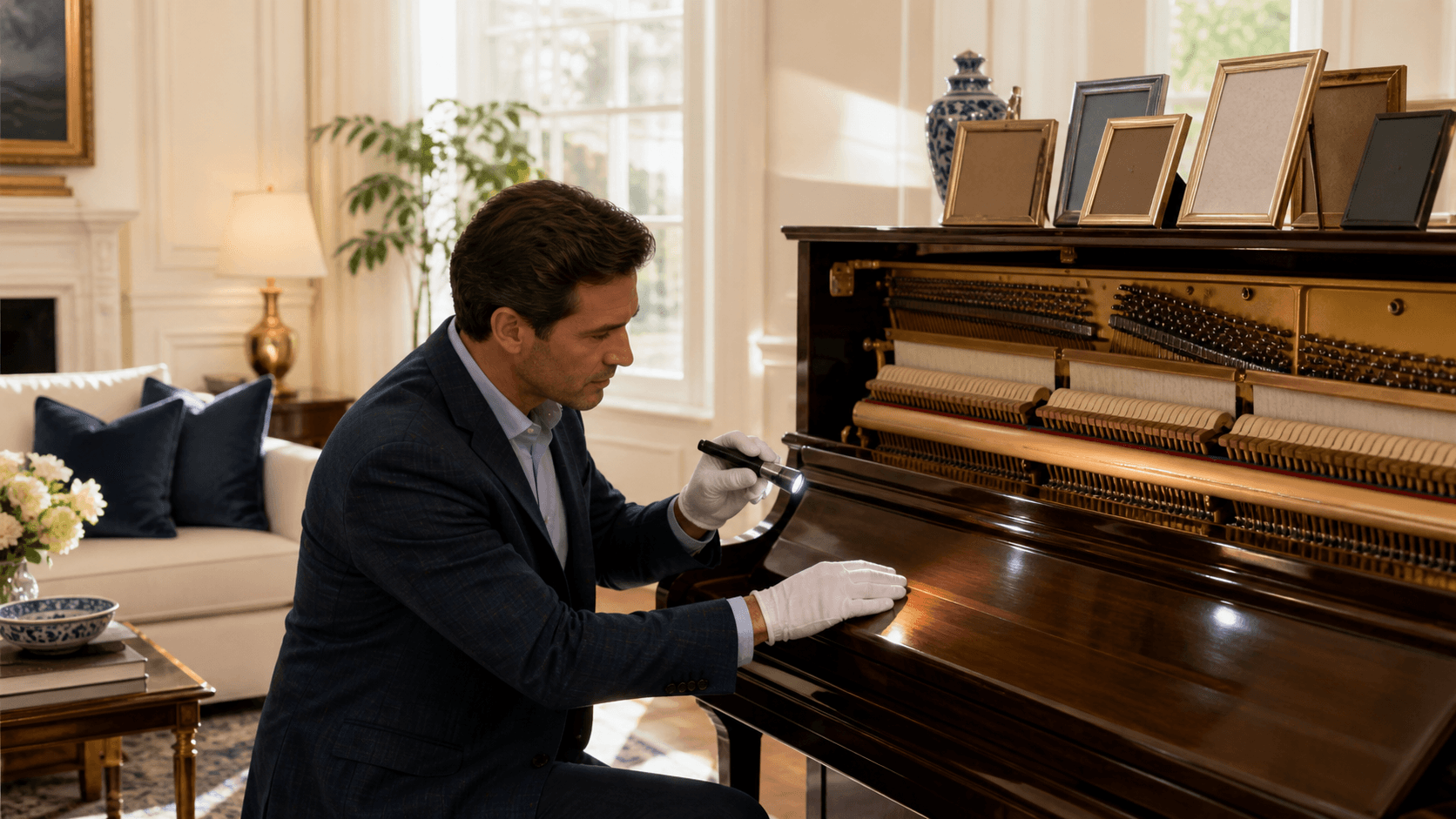
- Clear photos of the case, keyboard, and inside of the piano
This allows the conversation to stay focused. You can compare suggestions side by side and see which level of work, or which replacement instrument, aligns best with your goals and budget.
When to Rebuild, Repair, Replace, or Let Go of a Family Piano
Sometimes the answer is a clear decision to rebuild. Other times, replacing the piano with a different instrument or saying goodbye is the smarter and kinder choice.
A full rebuild is often justified when:
- The piano is a quality grand or upright from a respected maker.
- The structure is sound or can be made sound.
- The piano has deep sentimental meaning and will be played regularly.
Targeted repair or partial restoration may be better when:
- The piano has moderate but not exceptional musical potential.
- You need dependable function for home use without investing in a full rebuild.
- You expect to keep the piano for a defined period, such as during children's lesson years.
Replacing may be better when:
- The piano is an entry-level spinet or similar design with limited musical potential.
- The structure is badly compromised.
- Your main goal is simply to have a great, reliable piano in the house, not necessarily this specific one.
Letting go can be healthiest when no one plays, the cost to make the piano reliable is far beyond any realistic use you will get from it, and the instrument is taking up space or causing stress. The memories do not vanish with the instrument. Some families:
- Take detailed photos before the piano leaves.
- Save a small piece of original wood, a key, or a piece of hardware as a keepsake.
- Choose a better-suited pre-owned or rebuilt piano to start fresh traditions in the same home.
Next Steps to Clarify Your Piano's Future in Westchester
To bring all of this together, you can follow a simple checklist:
- Write down the piano's brand, serial number, and any known history.
- Take clear photos inside and out.
- Talk with your family about who will actually play it.
- Decide how important the sentimental side is compared with pure practicality.
- Set a comfortable budget range for either rebuilding, repair, or replacement before speaking with any shop.
A thoughtful conversation with a knowledgeable Westchester piano rebuilding and sales specialist can then build on this groundwork. By looking at both the emotional and musical sides of your instrument, you can arrive at a plan, whether rebuilding, repairing, replacing, or letting go, that fits your home, your family, and your long-term goals for having music in the house.
Get Started With Your Project Today
If you are ready to hear your instrument at its best again, we are here to help every step of the way. Explore our expert piano restoration services in Westchester to find the right approach for your piano's needs. Our team at Ford Piano will walk you through options, timelines, and expectations so you can move forward with confidence. Have questions or want to schedule a consultation now? Simply contact us to begin.