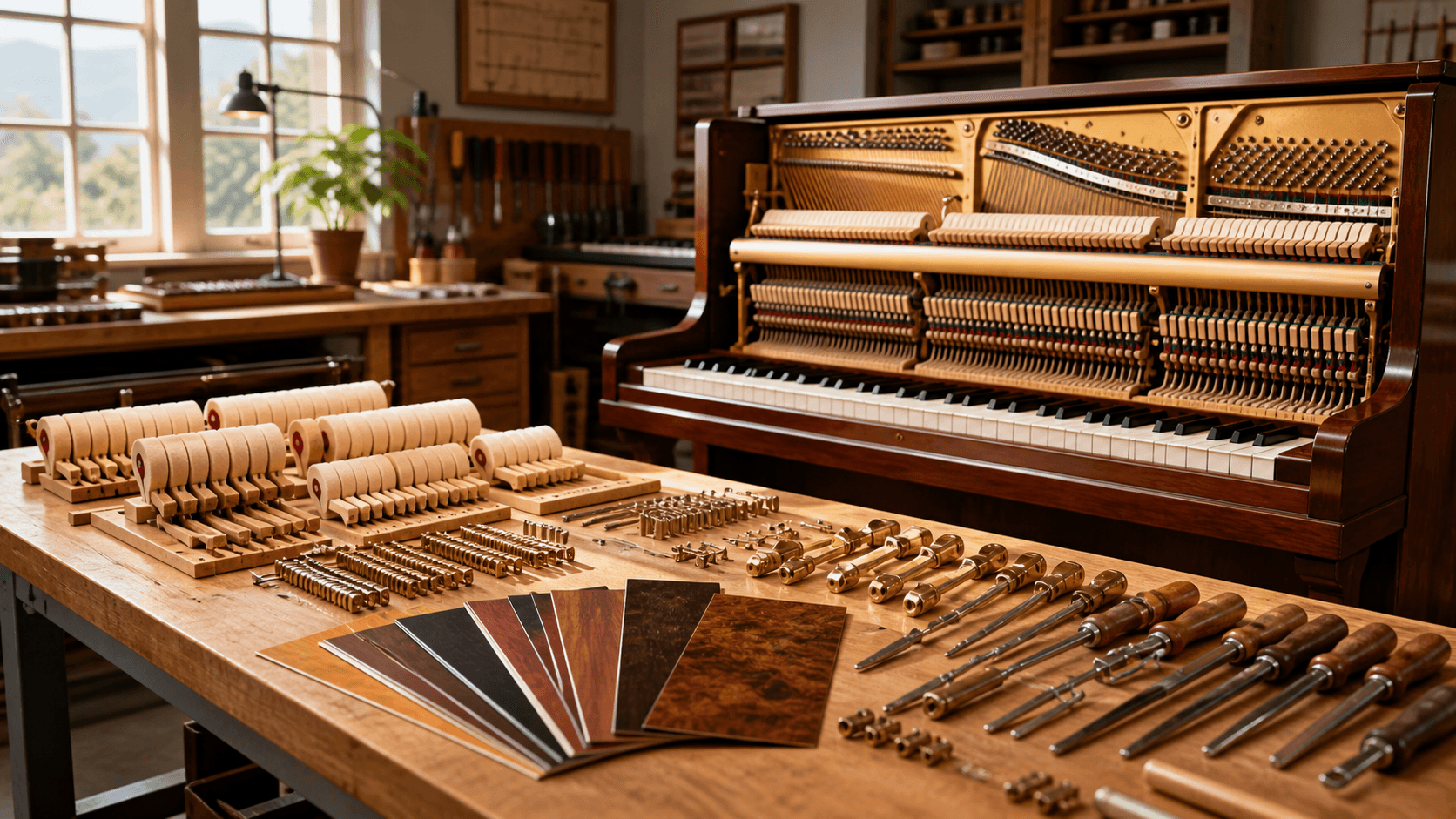

Restoration vs. Refinishing for Westchester Pianos
When people in Westchester tell us their piano "needs work," they usually mean one of two things. Either the piano does not play or sound the way it should, or it looks worn and tired in the room. Those are two very different problems, and they call for two very different kinds of shop work: restoration and refinishing.
Using the right term matters. It helps you explain what you want, avoid paying for work you do not need, and plan the right future for your instrument before concert season, lessons, and holiday gatherings pick up. In simple terms, restoration focuses on how the piano plays and sounds, while refinishing focuses on how it looks and how well the finish protects the wood. Because restoration and rebuilding directly affect the instrument's musical life and long‑term value, that is where most owners should start their planning. Refinishing then becomes a supporting option when the musical core is already in good shape or is being addressed at the same time.
What Piano Restoration and Rebuilding Really Include Under the Lid
When we talk about restoration, we are talking about rebuilding the musical heart of the piano. This is deep, technical work inside the instrument, not surface touchup on the case. In many Westchester projects, this restoration or rebuilding work is the central decision, and it is often weighed against the option of upgrading to a different piano.
Full or major restoration can include things like:
- Inspecting and repairing or replacing the soundboard and bridges
- Replacing the pinblock so tuning pins hold properly
- Restringing the piano with new strings and sometimes new tuning pins
- Rebuilding the action, including hammers, shanks, wippens, and key bushings
- Full regulation so the touch and response are back to factory-level feel
- Voicing work so the tone is balanced across the keyboard
Restoration is usually recommended when:
- The piano is a high-quality brand worth saving, such as a well-built grand or professional upright
- The instrument has decades of wear and will not hold a tuning well
- Notes are uneven, dead, or noisy, even after basic tuning and simple repairs
- The piano is meant to be an heirloom centerpiece in a home, studio, church, or school
- You are comparing the cost of rebuilding to the cost of buying a comparable new or reconditioned piano
One common Westchester situation is an inherited grand in a family home. On the outside, it might still look pretty good, with only small cabinet scratches. Under the lid, though, the soundboard can be tired, strings rusty, and the action badly worn. The piano may sound dull, be hard to control, or drift out of tune quickly. In that kind of case, we recommend focusing the budget on full restoration or rebuilding first, not just touching the finish, because cosmetic work alone will not bring the music back.
An in-depth restoration evaluation will often compare three paths:
- Rebuilding your existing instrument
- Purchasing a professionally restored or reconditioned piano
- Purchasing a new instrument
Understanding these options side by side helps you choose whether to invest in your current piano or treat restoration as an opportunity to move into a different instrument that better fits your space, budget, and musical goals.
When restoration is done well, the piano feels and sounds like a serious instrument again. It responds to a light touch, sings in the treble, and has power and color in the bass. For many Westchester families and institutions, that is the difference between a piece of furniture and a piano that invites people to sit down and play.
What Piano Refinishing Covers on the Outside
Refinishing, on the other hand, is all about the cabinet. It is careful furniture work that makes the piano look fresh and protects it for years to come. Because it does not address the internal musical structure, it is best viewed as a supporting service, either paired with restoration or used on instruments that already play well.
Typical refinishing steps include:
- Stripping off the old, worn, or cracked finish
- Repairing veneer, chips, dents, and case damage
- Sanding and smoothing the wood for a clean surface
- Staining or color matching so it fits your room and style
- Applying modern finishes in satin, semi-gloss, or high-gloss
It is important to understand what refinishing usually does not include. Unless you plan it together with restoration or rebuilding, it does not automatically cover:
- Internal rebuilding or new strings
- Action parts like hammers, shanks, or key bushings
- Full regulation and musical setup
If the piano already plays poorly, has sticky keys, or will not stay in tune, refinishing alone will not solve those problems. You will have a great-looking instrument that is still frustrating to play, and in some cases it may make more sense to direct that same budget toward restoration or even toward upgrading to a different piano.
A common Westchester example is a baby grand in a living room with strong sunlight. The finish can become faded and dull on one side, with scratches from moving chairs and everyday use. If the owner has kept up with regular tunings and the action is in good shape, refinishing is often a good supporting choice. The piano already sounds good, so we focus on reviving the cabinet, matching the color, and giving the room a beautiful centerpiece that also protects the wood and helps the instrument hold its resale value.
How to Know Which Option Your Piano Needs
To decide what your own piano needs, it helps to look at three things, in this order: how it plays, how well it holds a tuning, and how it looks. That sequence keeps restoration and rebuilding decisions, and possible replacement or upgrade options, at the center.
Start by asking:
- Does the touch feel even, or are some keys heavy, light, or dead?
- Does the tone sound full and singing, or thin, harsh, or lifeless?
- Does the tuning drift quickly, even after a recent visit from a technician?
If the piano does not respond well, sounds poor, or refuses to stay in tune, you are likely in restoration territory. That is where full or partial rebuilding can bring back musical quality. At this stage, a professional evaluation can also compare the projected results and costs of rebuilding your instrument with the option of selecting a reconditioned or new piano from a sales inventory.
If the piano plays and sounds good, and your tuner is happy with how it holds tuning, then look at the case:
- Is the finish badly scratched, cloudy, or sun-faded?
- Are there chips, loose veneer, or water marks?
- Does the color look dated compared to the rest of your room?
If the main complaint is appearance, then refinishing is probably the right path and can be scheduled as a secondary step. In many cases, a combined approach makes sense, such as internal action work paired with some level of cabinet refresher, especially when coordinating with a purchase, trade-in, or upgrade plan.
Professional piano restoration services in Westchester usually begin with a full evaluation. That includes checking the soundboard, bridges, action, strings, and finish so you can compare rebuilding, refinishing, or replacing the piano. Early autumn is a smart time to arrange this kind of assessment. Indoor heating starts to dry the air, which affects tuning and wood, and playing often increases as lessons, recitals, and gatherings pick up. Starting then gives enough time for shop work, or the purchase and delivery of a different instrument, to be completed before spring events.
Real Westchester Case Snapshots
We often see a wide mix of piano conditions around Westchester, and no two projects are exactly the same. Here are a few common types of outcomes, with restoration and upgrade decisions at the center.
One example is a studio upright in a small White Plains music room. The cabinet might be mostly fine, with only minor scuffs, but the action and strings are very tired from years of daily practice. In that case, a partial restoration can make sense: new hammers, some action rebuilding, new strings, and a full regulation, plus light cabinet touch-up. The piano looks presentable, but more importantly, it plays like a serious teaching instrument again. During the evaluation, the owner may also compare this rebuilding work with the option of purchasing a reconditioned studio upright from a sales inventory; sometimes the original instrument wins, and sometimes an upgraded piano is the better long-term tool.
Another frequent type is a historic grand from a larger home, such as an older estate in a town like Bedford. These pianos often have great bones but suffer from both internal and external age. For them, full restoration and full refinishing together can be the best answer. The musical core is rebuilt, the case is stripped and refinished, and the end result is an instrument that could easily sit in a showroom or performance space. If the underlying structure is not sound, however, it may be wiser to direct that budget toward the purchase of a different high-quality grand that has already been professionally rebuilt.
In other situations, the smart choice is refinishing only. For example, a family piano in a Yonkers home might have been tuned regularly and treated gently. The action is still healthy, tone is pleasing, and its tuning stability is acceptable. The only real problem is a scratched and dull finish. Here, preserving the original internal parts and focusing on cabinet refinishing respects both the instrument and the budget, and the owner can plan separately for any future upgrade or sale.
Piano restoration services in Westchester are not one-size-fits-all. The right plan depends on:
- Brand and build quality
- Age and history of use
- Whether it will live in a home, studio, church, or school
- Whether your goal is daily play, recording, teaching, or mostly decorative use
- Whether it makes more sense to rebuild the current instrument or move into a different piano through a sales program
Project timelines vary, from shorter shop stays for focused work to longer periods for full restoration and refinishing together. Many owners find that planning work in the fall lines up nicely with having the piano ready for heavy use in the spring, including recitals and family events, whether that means a rebuilt existing instrument or the delivery of a new or reconditioned piano.
Planning the Right Future for Your Piano
When you are ready to think seriously about your piano's future, it helps to start with some basic details. Note the brand and, if you can find it, the serial number. Try to gather any information you know about its age and history. Clear photos of the case and shots under the lid are helpful too, along with a simple note of your goals: heirloom, teaching tool, regular practice piano, or decorative showpiece.
From there, an in-person evaluation, either in your Westchester home or at a professional shop, can clarify whether full restoration, refinishing, a mix of both, or upgrading to a different piano makes the most sense. Sometimes, rebuilding a low-quality instrument is not the best long-term choice, and a new or reconditioned piano can offer better value in terms of musical results, reliability, and warranty support.
With thoughtful planning centered on restoration and rebuilding decisions, and with clear information about available instruments for sale, you can match the level of work or upgrade to your piano and your plans, so the instrument in your living room, studio, or sanctuary plays the role you want it to for many years to come.
Get Started With Your Project Today
If you are ready to hear your instrument at its best again, our team at Ford Piano is here to help. Explore our piano restoration services in Westchester to see how we can bring your piano back to life with careful craftsmanship and attention to detail. Share a bit about your instrument and goals through our contact page, and we will follow up with clear recommendations and next steps.